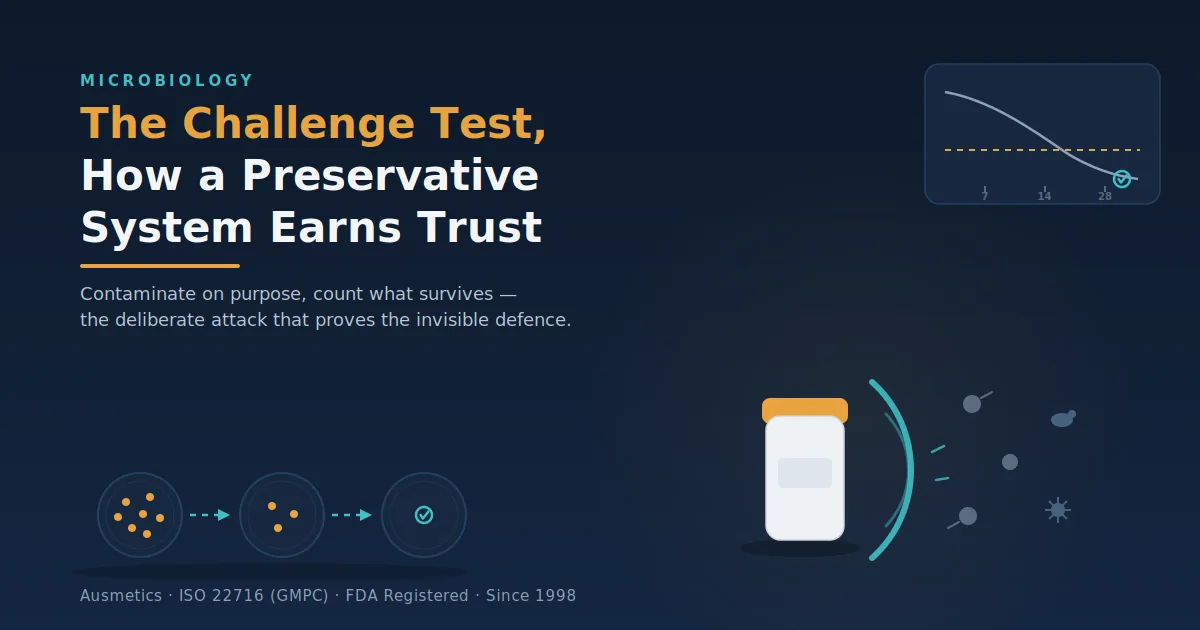
اختبار التحدي – رسميا, اختبار فعالية المواد الحافظة — حقن منتج تجميلي عمدًا بالكائنات الحية الدقيقة ثم إحصاؤه مع مرور الوقت, لإثبات أن نظام الحافظة يمكنه قمع ما سيقدمه الاستخدام اليومي حتمًا. من بين الثباتات الثلاثة التي يجب أن يتمتع بها المنتج, هذا هو الصامت. كريم منقسم يعلن عن نفسه بمجرد رؤيته; نظام المحافظة الضعيف لا يقول شيئًا على الإطلاق - حتى اللحظة الأكثر أهمية.
وصف دليل الاستقرار الخاص بنا الاستقرار الميكروبيولوجي بأنه موضوع يستحق مقالًا خاصًا به. هذا هو هذا المقال. وفكرتها المركزية تنتمي إلى المعيار نفسه: ISO 11930, الطريقة الدولية لتقييم الحماية المضادة للميكروبات لمستحضرات التجميل, الإطارات التي تحمي أنها تأتي من مصادر تشمل الحفاظ على المواد الكيميائية, الخصائص الكامنة في الصياغة, تصميم الحزمة, وعملية التصنيع. بعبارة أخرى: نظام المحافظة هو النظام, ليس عنصرا. اختبار التحدي هو حيث النظام برمته, وليس جزيء واحد, يكسب ثقته.
يشرح هذا الدليل الدليل من جانب المصنع، وهو الجانب الذي يدير مختبر التحدي الميكروبي الخاص به هذه الدراسات: لماذا يتم محاكاة التلوث عن قصد؟, كيف يعمل الاختبار في الواقع, لماذا حولت قوائم مكونات متاجر التجزئة عملية الحفظ إلى تخصص هندسي؟, وكيف ينبغي للمشتري أن يقرأ التقرير الذي يعود إليه.
أنا. لماذا تلوث عن قصد
لأن العميل سوف. يتم فتح الجرة ويدخل الإصبع; رذاذ ماء الاستحمام في زجاجة; تبقى المضخة دافئة ورطبة على رف الحمام لمدة عام. رقم PAO الموجود على ملصق الاتحاد الأوروبي - المدة التي يظل فيها المنتج آمنًا بعد الفتح لأول مرة - هو, في القلب, وعد ميكروبيولوجي: الافتتاح يقدم التلوث, ويجب على نظام الحماية أن يستمر في التعامل معها لعدة أشهر من الحياة الحقيقية. اختبار التحدي يحاكي هذا المستقبل مقدما, تحت السيطرة, حيث يكلف الفشل إعادة صياغة بدلاً من الاستدعاء.
المخاطر تبرر الطريقة. الفشل المادي مرئي والفشل الكيميائي قابل للقياس, لكن الفشل الميكروبي يكون غير مرئي حتى يصبح ضارًا - وهذا هو السبب في أن هذا هو البعد الوحيد للاستقرار الذي يتم إثباته من خلال الهجوم المتعمد. المنتج ملوث عن قصد, والنظام مراقب وهو يحارب.
ثانيا. كيف يتم تشغيل الاختبار فعليًا
تحت علم الأحياء الدقيقة, الهيكل بسيط - معركة محكومة باستخدام لوحة النتائج:
| خطوة | ماذا يحدث | ماذا يخبرك |
|---|---|---|
| فحص خط الأساس | ويتم التأكد من الجودة الميكروبية الأولية للمنتج قبل إضافة أي شيء | سيقيس الاختبار أداء النظام, عدم التلوث الموجود مسبقًا |
| التلقيح | يتم شحن العينات بلوحة قياسية مكونة من خمسة كائنات حية - S. المذهبة, ه. القولونية, ص. الزنجارية, ج. المبيض, و أ. brasiliensis - عند التركيزات التي يحددها المعيار | البكتيريا, خميرة, والعفن: الطيف الواقعي لما يسمح به الاستخدام |
| التهم الموقوتة | يتم إحصاء الناجين على فترات زمنية محددة على مدار شهر تقريبًا - عادةً أيام 7, 14, و 28, مع النقاط السابقة في بعض المخططات | ما إذا كان النظام يقتل بسرعة, يحمل أرضه, أو يفقدها بهدوء |
| التخفيض مقابل المعايير | وتتم مقارنة تخفيضات السجل المقاسة بمعايير القبول المنشورة للمعيار | يمر, تمر مع مبرر موثق, أو العودة إلى مقاعد البدلاء صياغة |
هناك تحسينان مهمان في الممارسة العملية. أولاً, المعايير تأتي في مستويين: يمثل معيار المعيار (أ) مستوى الفعالية الموصى به, في حين أن المعيار ب مقبول عندما يبرره تقييم موثق للمخاطر - لذلك "اجتاز" ليست كلمة واحدة بل اختيار مع سبب مرفق. ثانية, الطريقة لها أشقاء: المختبرات المعتمدة تشغيل اختبار التحدي تحت ISO 11930, فصل دستور الأدوية الأمريكي, أو دستور الأدوية الأوروبي, وتختلف المخططات في أوقات أخذ العينات ومعايير القبول على الرغم من تقاسم الهدف. تقرير يقول "اجتاز اختبار التحدي" دون تسمية المخطط والإصدار لم ينته من جملته.
ثالثا. هندسة الحفظ في عصر القائمة
القانون يرسم الحدود الأولى: تتضمن لائحة مستحضرات التجميل في الاتحاد الأوروبي قائمة إيجابية - ولا يجوز استخدام سوى المواد الحافظة الموجودة في الملحق الخامس منها على الإطلاق. ثم برامج البيع بالتجزئة التي حددناها قوائم المواد المحظورة قطع أعمق: العائلات الحافظة التي تظل قانونية ضمن الحدود - البروبيل- والبوتيل بارابين من بينها - كانت مستهدفة للإزالة من خلال السياسات الكيميائية لمتاجر التجزئة التي لم يطالب بها أي قانون. كل استبعاد يضيق نطاق الأدوات, ولم يكن صندوق الأدوات كبيرًا على الإطلاق.
وهذا هو السبب في أن الحفظ الحديث هو هندسة وليس اختيارًا, بالاعتماد على كل مصدر من مصادر الحماية الأسماء الإطارية للمعيار:
| مصدر الحماية | كيف يبدو في الممارسة العملية |
|---|---|
| الحفظ الكيميائي | جرعات أصغر من العديد من العناصر النشطة المتوافقة التي تعمل بالتآزر, بدلاً من جزيء واحد ثقيل الوزن |
| الصياغة نفسها | مجموعة الرقم الهيدروجيني حيث تكافح الميكروبات, بقي النشاط المائي منخفضًا, تم اختيار المكونات لتجويع النمو بدلاً من إطعامه |
| تصميم الحزمة | مضخات بدون هواء وفتحات ضيقة تسمح بدخول كمية أقل بكثير من العالم مما تسمح به الجرة المفتوحة |
| عملية التصنيع | صحة, أنظمة المياه, والضوابط التي تمنح نظام الحافظة خط بداية نظيفًا |
اختبار التحدي هو حيث يثبت النظام المعاد بناؤه أنه لا يزال يعمل. أ "خالية من" قصة الحفظ التي لم تنجو من التلقيح المتعمد هي ادعاء تسويقي; الذي يحتوي على ملف الأمان.
رابعا. تقويم, حدود, والمصنع
في برنامج منضبط، يتم إجراء اختبار التحدي جنبًا إلى جنب مع العمل القديم الذي قمنا بتحديده اختبار الاستقرار التجميلي, وتكرر العديد من البروتوكولات ذلك على العينات القديمة، لأن نظام المادة الحافظة يمكن أن يضعف مع تقدم عمر الصيغة المحيطة به, ويجب أن يتم الوعد في نهاية مدة الصلاحية, ليس فقط في البداية. يتم رسم الحدود بواسطة المعيار نفسه: تم تصميم هذه الطريقة في المقام الأول للمنتجات التي تحتوي على الماء, والتنسيقات التي تم تحديد مخاطرها الميكروبيولوجية على أنها منخفضة - النقاط القياسية التي تحدد ISO 29621 - يمكن تبرير الإعفاء من خلال تقييم المخاطر الموثق. الإعفاء هو حجة يوقعها شخص ما, ليس اختصارًا يأخذه شخص ما.
تغيير الانضباط يغلق الحلقة: يعد تبديل مادة حافظة تغييرًا كبيرًا في أي خريطة ذات مستوى جدي, ويتضمن جسر التكافؤ الخاص به اختبار تحدي جديدًا، فالمقارنة الورقية لا يمكن أن تثبت منحنى القتل. في Ausmetics, يتم هذا العمل من خلال مختبر مخصص للتحدي الميكروبي, واحد من أربعة مختبرات داخلية, إلى جانب المراقبة الميكروبيولوجية الروتينية التي تقوم بها ضمان الجودة يطبق النظام دفعة تلو الأخرى. ل مستحضرات التجميل OEM والشركة المصنعة ODM إعادة بناء أنظمة الحفظ حول قوائم المكونات الأقصر من أي وقت مضى, إن وجود حلقة الهجوم والعد داخل الشركة هو ما يبقي تلك الهندسة داخل تقويم التطوير.
الخامس. قراءة تقرير التحدي مثل المشتري
في تجربتنا في خدمة برامج العلامات التجارية والبيع بالتجزئة, خمسة أسئلة تفصل التقرير عن الختم. أي مخطط والإصدار — ISO 11930, جامعة جنوب المحيط الهادئ, EP - لأنها تختلف, و "اجتاز" لا معنى له بدون اسم. ما هو المعيار - أ, أو ب مع تبريرها المكتوب, لأن الرسالة قرار, ليس الصف. تم تشغيل لوحة الكائن الحي بالكامل, بالإضافة إلى أي إضافات يتطلبها استخدام المنتج. النقاط الزمنية التي تم أخذ عينات منها بالفعل, على أي نسخة الصيغة, في أي سياق التعبئة والتغليف. وما هي السياسة المتبعة عند فشل الاختبار – حلقة إعادة الصياغة وإعادة اختبار الأدلة, لأن سجل الحفظ الذي لا يحتوي على أي إخفاقات مسجلة هو نظام حفظ الملفات, ليس سجلا حافلا.
سطر واحد "تم اجتياز اختبار التحدي" هو ختم. البلاغ الذي يمكنك استجوابه هو نظام يكسب ثقته أمامك.
أسئلة مكررة
هل يحتاج كل منتج تجميلي إلى اختبار التحدي؟?
عادةً ما تقوم المنتجات التي تحتوي على الماء بذلك، فالماء هو ما يجعل التركيبة صالحة للسكن. الأشكال التي تكون مخاطرها الميكروبيولوجية منخفضة حقًا - المنتجات اللامائية, نسبة كحول عالية جدًا, الرقم الهيدروجيني الشديد - يمكن أن يبرر الإعفاء من خلال مسار تقييم المخاطر الموثق الذي يشير إليه المعيار نفسه. تم توثيق الكلمة الرئيسية: الإعفاء وسيطة موقعة في ملف الأمان, ليس افتراضا على مقاعد البدلاء.
ما هو الفرق بين ايزو 11930 وطرق دستور الأدوية?
الهدف مشترك; المخططات ليست كذلك. ISO 11930 وتستخدم فصول دستور الأدوية الأمريكي والأوروبي لوحات الكائنات الحية المتداخلة ولكنها تختلف في أوقات أخذ العينات ومعايير القبول, لذلك يمكن للصيغة أن تلبي مخططًا واحدًا ولا ترقى إلى مستوى آخر. ولهذا السبب يطلب المشترون المخطط والإصدار بالاسم - ولماذا تحافظ المصانع التي تخدم العديد من الأسواق على تحديد الاختلافات بدلاً من معالجتها "اختبار التحدي" كشيء واحد.
إذا نجح المنتج في اختبار التحدي, هل هي محمية إلى الأبد?
لا - التمريرة تثبت النظام كما تمت صياغته, معبأة, وتصنيعها في ذلك الوقت. الشيخوخة يمكن أن تضعف عملية الحفظ, حزمة جديدة تغير التعرض, تعديل الصيغة يغير الكيمياء, وتغيير العملية يمكن أن يغير العبء الحيوي الأولي. ولذلك تقوم البرامج المنضبطة بإعادة الاختبار على المحفزات وإقران اختبار التحدي مع مراقبة الجودة الميكروبيولوجية الروتينية في كل دفعة, فيبقى النظام المثبت هو النظام المشحون.
هل تغيير المادة الحافظة يعني إعادة الاختبار؟?
نعم. تغير مقايضة المواد الحافظة الوظيفة المحددة التي يوجد هذا الاختبار لإثباتها, لذا فإن جسر التكافؤ الخاص به يشتمل على اختبار تحدي جديد جنبًا إلى جنب مع جسر الاستقرار - لا يمكن لمقارنة المواصفات وحدها إثبات منحنى التوقف. في لغة الخريطة الطبقية يعد هذا تغييرًا كبيرًا: موافقة العميل قبل التنفيذ, الأدلة قبل الشحن, والدفعات الأولى في ظل النظام الجديد تم تحديدها على هذا النحو.
الخلاصة والخطوات التالية
اختبار التحدي هو النظير الهادئ لكل وعد مرئي على الملصق: الهجوم المتعمد الذي يثبت الدفاع الخفي. منطقها هو المعيار نفسه — الحماية تأتي من الكيمياء, الصياغة, العبوة, والعملية معًا - وفي عصر تستمر فيه قوائم بائعي التجزئة في تقليص صندوق الأدوات الكيميائية, الاختبار هو حيث تظهر الأنظمة المعاد تصميمها أنها لا تزال صامدة. الثقة هنا لا تطالب بها; يتم تلقيحه, عد, وحصل.
قامت Ausmetics بتشغيل هذا الدليل لـ 28+ سنوات من ISO لها 22716 (GMPC) معتمد, مرافق Sedex التي تم تدقيقها في قوانغتشو، وهو مختبر مخصص للتحديات الميكروبية من بين أربعة مختبرات داخلية, تم تصميم هندسة الحفظ لتمثل قوائم بائعي التجزئة التي يتم فحص صيغها مقابلها, والمراقبة الميكروبيولوجية الروتينية على كل دفعة. يمكن لفرق تطوير العلامات التجارية والبيع بالتجزئة مراجعة موقعنا خدمات تصنيع مستحضرات التجميل ODM OEM أو اتصل بـ أوسماتيكس بالصيغة والقوائم التي يجب أن تبقى على قيد الحياة - يأتي الرد باستراتيجية الحفظ وخطة الاختبار لإثبات ذلك.