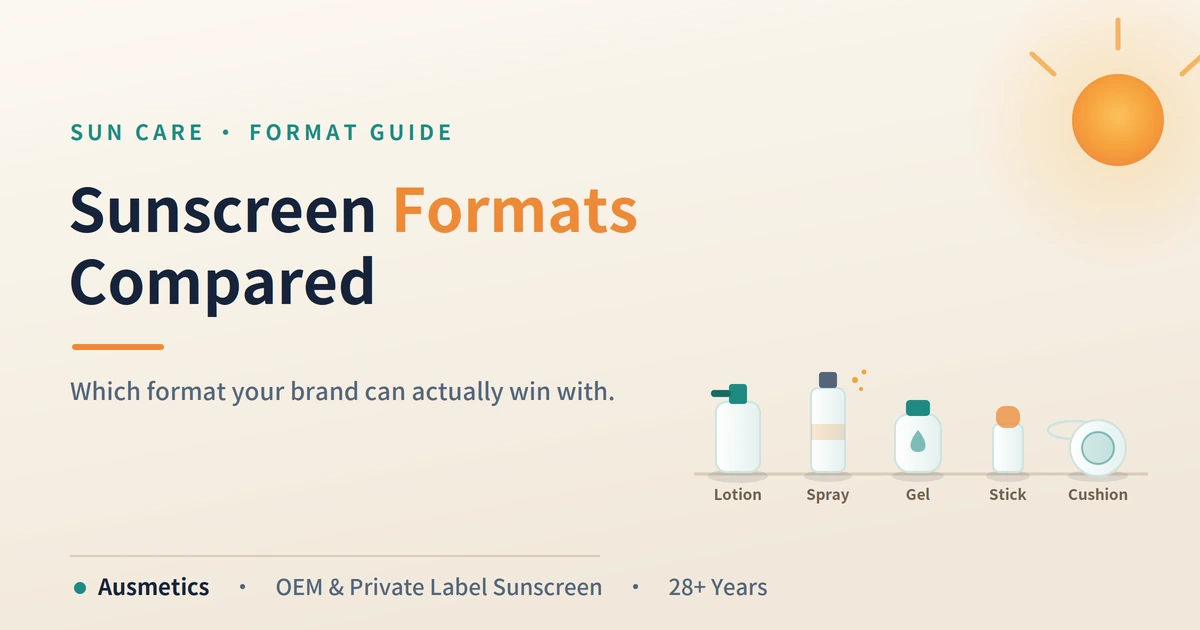
Unseen Sunscreen на Supergoop е прозрачен гел, който се продава като грунд за грим. Beauty of Joseon's Relief Sun е лек флуид в свиваща се тубичка, който стана вирусен за усещане като нищо върху кожата. сол & Stone прави тониран стик за лице, позициониран заедно със сърф културата и чистата красота. Три различни продукта, три различни бизнеса - и това, което ги разделя, не е SPF номерът или UV филтърът. Това е форматът. The слънцезащитни формати марката избира е, на практика, единственото решение, което оформя за кого е продуктът, как се чувства, какво струва, и колко трудно е да се направи. Повечето основатели го третират като детайл на опаковката. Печелившите марки в момента го третираха като стратегия.
Това ръководство сравнява основните формати — лосион, сметана, гел, спрей, Стик, и възглавницата, която тихо избухва - от гледна точка на изграждане на марка. За всеки, въпросите, които имат значение, са къде седи на пазара, кой печели с него и как, и с какво те задължава. Ако работите с a частен производител на слънцезащитни продукти, the format you pick determines almost everything downstream.
Една бележка за рамкиране: this is written for brands selling in markets that regulate sunscreen as a cosmetic — the EU, Обединеното кралство, голяма част от Азия, Южна Америка, залива, и части от Африка. Всички тези формати са общи за тях, макар и няколко специфични за формата правила (особено аерозоли) варират според пазара.
аз. Lotion and Cream Still Own the Shelf — and That Is the Problem
Лосионът и кремът са приблизително 54% на пазара на слънцезащитни продукти в 2026, според Fortune Business Insights. Те остават по подразбиране по добра причина: равномерно покритие, съвместимост с всеки тип кожа, and the ability to carry skincare actives — niacinamide, Хиалуронова киселина, antioxidants — more comfortably than any other format. Почти всеки "SPF като последна стъпка от вашата рутина" позиционирането приключва тук, and that is precisely the problem for a new brand: рафтът вече е пълен.
The growth inside this center is not in plain sunscreen. It is in hybrids that blur the line between sun care and base makeup. В Обединеното кралство, продажбите на нюанси за кожа скочиха 34% през годината до май 2026, според Circana, нагоре от 14% предната година. Solésence chief executive Kevin Cureton frames it bluntly: нюансът на кожата се превръща в ежедневен овлажнител на потребителите на красота, един продукт, който осигурява покритие, грижа за кожата, и SPF. Anastasia Beverly Hills launched its Hydra Prime at SPF 50, продавайки го като грунд, а не като слънцезащитен крем. Поуката е, че печелившият лосион в 2026 is not being sold as a lotion at all — it is a moisturiser, грунд, или нюанс на кожата, който защитава.
За марка, която навлиза в това пространство, внушението е пряко: недиференциран SPF лосион, колкото и да е добре направено, е трудно да се продаде. Ако лосионът е формата, има нужда от причина да съществува отвъд SPF - история за грижа за кожата, нюанс, игра на текстура — защото се конкурира с хиляди други тръби, които вече работят добре.
II. Пръчки — най-трудните за правене, и най-бързо растящият на лицето
Ако лосионът притежава рафта, пръчките притежават инерцията върху лицето. Един пазарен анализ оценява приблизително сегмента на слънцезащитните стикове за лице $752 милиона в 2024, насочвайки се към $1.1 милиард от 2034, а логиката е проста: пръчка отива в торба, нанася се повторно върху грима без огледало, и пътувания. Това удобство не е хубаво да имаш. Това е причината хората действително да кандидатстват отново през деня, което е мястото, където повечето слънцезащитни продукти се провалят в реалния живот.
Полето вече е достатъчно пренаселено, за да има нива. CeraVe има стик с хиалуронова киселина и керамиди, играейки ъгъла за поправка на бариерата. Cetaphil пуска минерален стик на SPF 50 насочен към чувствителна кожа. Синият гущер доминира при децата. сол & Стоун седи в чисто, премия, територия за живот на открито. И Нивеа, не е марка, която обикновено се свързва с K-beauty, пусна на пазара Silky UV Stick, който произвежда в Корея и популяризира специално с невидимото си покритие и корейската технология – сигнал за това колко центърът на тежестта на формата се е изместил към Азия.
на Спейт 2026 Докладът за грижа за слънцето показва промяната ясно: Слънчевата грижа за лицето преминава от спрейове към стикове, серуми, и поставяне на мъгла. В Amazon в САЩ, "корейски слънцезащитен стик" рисува грубо 3,000 търсения на седмица, с първите три продукта, които улавят почти 60% кликвания — концентрирано търсене, но все още не е заключено.
Ето структурния отвор, който прави пръчките особено интересни за по-нова марка. В множество отчети за индустрията, появява се последователна линия: участието на частни марки в стикове остава ограничено, защото форматът е наистина по-труден за формулиране. Твърдият слънцезащитен крем трябва да остане твърд при топлина в склад или транспортен контейнер, все още се плъзгат, без да се влачат, и поставете достатъчно равномерен филм, за да осигурите номиналния SPF. Минерални формули в стикове — сегментът, който расте най-бързо, с един доклад, поставящ растеж на минерална пръчка 62% — са още по-трудни. Тази трудност е ровът. Марка, която може да произведе пръчка, която работи гладко и оцелява през летния транзит, се конкурира в пространство, което половината пазар на частни марки избягва. От страната на опаковката, бариерата е ниска: контейнерите за стик на едро работят грубо $0.13 да се $0.58 единица на минимум около 1,000 да се 10,000 парчета. Цената не е в тубата. Това е в това, че пръчката вътре в нея наистина работи.
III. Възглавници - форматът, който повечето ръководства пропускат
Наистина новото вписване, което повечето форматирани обобщения пренебрегват, е слънцезащитната възглавница - течен SPF, държан в напоена с гъба компактна кутия, заимстван направо от грима на K-beauty, притиснат върху кожата за безпроблемно повторно нанасяне дори върху цялото лице. Spate identifies cushions as the latest K-beauty format making waves in the US market, с TirTir и Laneige начело. Същата K-beauty вълна е това, което изведе Beauty of Joseon в десетте най-добри марки за слънцезащита в Европа, според Circana.
За марка, привлекателността на възглавницата е същата като на пръчката, но една стъпка по-нататък по кривата на трудност: тя е диференцирана, рано е, и е трудно да се произвежда добре, което означава, че конкурентното поле е слабо. It is not a first product for a brand just getting started — but for one ready to stand out in a crowded market, това е рязък ход, and one most competitors are not yet set up to make.
IV. Spray — Honest About What It Does and Does Not Do
Спрей е форматът за тяло и удобство, и расте точно върху това: Fortune Business Insights notes sprays gaining share on the strength of usage convenience, with colored roll-on products in particular pulling in younger buyers. The reapplication habit a spray enables is genuinely valuable — it is what people reach for after a swim or a run, the format that turns a single-use product into a routine.
Честният улов е пропуск в защитата в реалния свят. Всеки формат е тестван за SPF в една и съща доза - два милиграма на квадратен сантиметър, под ISO 24444 — но защото спреят се замъглява, хората рутинно прилагат по-малко от това, и вятърът взема дял от това, което правят. The protection a customer actually gets from a spray can trail the number on the can, не заради формулата, но поради начина, по който се използва форматът. (The testing side of this is covered in detail in a companion guide on как работи SPF тестването.) None of this disqualifies spray — it means a brand that sells a spray should make application guidance part of the product, и го позиционирайте за тялото и за повторно нанасяне, а не като основен слънцезащитен крем за лице. Спреят също носи работно тегло: аерозолното пълнене е отделна линия със собствени разходи и регулаторни стъпки на някои пазари.
V. Гел и леката смяна
Гелът е на водна основа, немазен формат, подходящ за мазна и склонна към акне кожа и гореща, влажен климат, където богатият крем не е стартер. Той е част от по-широко движение, което прави цялата категория: слънцезащитните текстури са станали по-леки, по-прозрачен, и по-елегантно, което е една от основните причини ежедневното усвояване на SPF нараства. Воднистият, "млечен" K-beauty текстурите са най-ясният израз - тези, които накараха хората да искат да си сложат слънцезащитен крем, вместо да го толерират.
За марка, гелът е по-скоро позициониращ инструмент, отколкото обемна игра. Той сигнализира за специфична аудитория - мазна кожа, невидимо износване, модерна текстура — без много копия, и позволява на по-нова марка да претендира за ясен клиентски сегмент, вместо да се бори с всеки универсален лосион за внимание. Той носи по-малко претенции за богата грижа за кожата, отколкото крем, така че го третирайте като формат, който е на първо място. Но на пазар, където усещането все повече продава слънцезащитен крем, това не е слабост.
VI. До какво се добавят данните
Четете заедно, картината е последователна. Лосион и крем поддържат обема — 54% на пазара — но и най-голямата конкуренция, и марките, които растат в това пространство, са тези, които продават хибриди (нюанси на кожата, праймери, овлажнители със SPF) а не обикновен слънцезащитен крем. Най-бързият растеж и най-ясното разграничаване са по краищата: пръчки и възглавнички по лицето, спрейове за тяло, гелове и леки течности за специфични аудитории. А форматите по краищата се правят по-трудно, което е точно това, което ги прави отворени - по-малко производители се притесняват, така че по-малко марки се конкурират там.
Две неща, които спъват основателите при избора на формат. Първо, формат и филтър са отделни решения: дали вашият слънцезащитен крем използва минерални или химически UV филтри е различна ос, която взаимодейства с формата - минералните системи са по-трудни за поддържане невидими в спрей, например, и минералните пръчици се поддържат по-трудни за нанасяне. Второ, форматът задава вашата опаковка, инструментална екипировка, Минимални количества на поръчка, и цена на единица, така че трябва да се определи цената от самото начало, не е открит по-късно. Пълната последователност е в ръководството на как да стартирате марка слънцезащитни продукти.
За марки, насочени към козметични регулирани пазари, практическият извод е да изберете формата, който пасва на клиента - и след това да намерите производител с дълбочината на формулировката, за да я направите наистина добре, особено ако е от трудните. Ausmetics has worked across every major sunscreen format for more than 28 години, с вътрешен SPF скрининг и ISO 22716 (GMPC) производство, което позволява на една марка да се конкурира във формати, където възможностите са оскъдни, вместо да се задоволява с каквото и да е ограничена фабрика. Можете да проучите опциите с опитен OEM производител на слънцезащитни продукти, или говорете с нашия екип за това кой формат пасва на вашия.
Често задавани въпроси
Кой формат на слънцезащитен крем трябва първо да лансира нова марка?
Зависи къде дадена марка иска да се конкурира. Лосион и крем се задържат 54% на пазара, така че те предлагат обем, но жестока конкуренция, and an undifferentiated SPF lotion is a hard sell when the shelf is already full. Sticks and cushions are growing faster and are easier to differentiate, но те са по-трудни за формулиране. Най-силният избор свързва целевия клиент с формат, който производителят наистина може да направи добре – марките, които пробиват в момента, са тези, които са избрали формат, го направи отлично, и изгради марката около това преживяване.
Слънцезащитният спрей е толкова ефективен, колкото и лосионът?
В тестване, yes — every format is assessed at the same fixed dose under ISO 24444, so a spray and a lotion with the same SPF perform equally on paper. На практика, a gap can open up because people tend to apply less spray than the tested amount and wind carries some away. Спреят предпазва също толкова добре, колкото и лосионът, ако потребителят нанесе обилно, равномерен слой и го втрива. За марки, това означава, че ясните насоки за прилагане са част от продажбата на спрей, не закъсняла мисъл.
Дали слънцезащитните стикове са добра възможност за нова марка?
Те могат да бъдат силни. Сегментът на слънцезащитните стикове за лице се оценява на около $752 милиона и прогнозирани към $1.1 милиард от 2034, като участието на частни марки остава ограничено, тъй като стиковете са по-трудни за формулиране и се поддържат стабилни при топлина. Този недостиг създава свобода: марка, чиято пръчка се прилага равномерно и оцелява при транзит, се конкурира в пространство, което много други избягват. Лентата е с качество на формулата, не маркетингов бюджет, което облагодетелства марките, които внимателно избират своя производител.
Какъв слънцезащитен крем работи най-добре за мазна кожа?
Гел или лека течност. Геловете са на водна основа, абсорбира бързо, и е по-малко вероятно да запушат порите, който подхожда на мазна и склонна към акне кожа и гореща, влажни пазари. По-широкото се измества към светлината, "млечен" K-beauty текстурите се намират на същата територия. За марка, гелът се удвоява като комфортен избор и ясен сигнал за позициониране - казва той "за мазна кожа, невидимо износване" без много копие.
Форматът променя ли SPF на слънцезащитен крем?
Не. SPF се измерва при фиксирано количество на приложение, независимо от формата, така че тестваното число отразява формулата, не дали е лосион, гел, спрей, или пръчка. Това, което форматът променя, е колко защита всъщност получава потребителят на практика, защото някои формати са по-лесни за пълно прилагане, дори доза от други. Това е реална разлика в доставената защита, няма разлика в номиналния SPF.
Където са отворите
Рафтът все още принадлежи на лосион и крем, и вероятно винаги ще бъде. Но марките, които пробиха наскоро - Supergoop с невидим гел, продаван като грунд, Beauty of Joseon с лека като пера течност, която стана вирусна само на усещане, сол & Камък с лицева пръчка, която сигнализира за начина на живот - всичко го направи чрез избор на формат, което го прави отлично, и изграждане на марка около опита, а не SPF номера. Данните подкрепят модела: растежа, социалния импулс, и пространството за разграничаване е във форматите по краищата, и тези формати са най-трудни за правене. Оскъдните възможности са мястото, където по-новата марка печели.