BLOG

The Rise of Peel off Lip Stains

The Rise of Peel Off Lip Stains: Science, Market Trends & Opportunities

Table of Contents

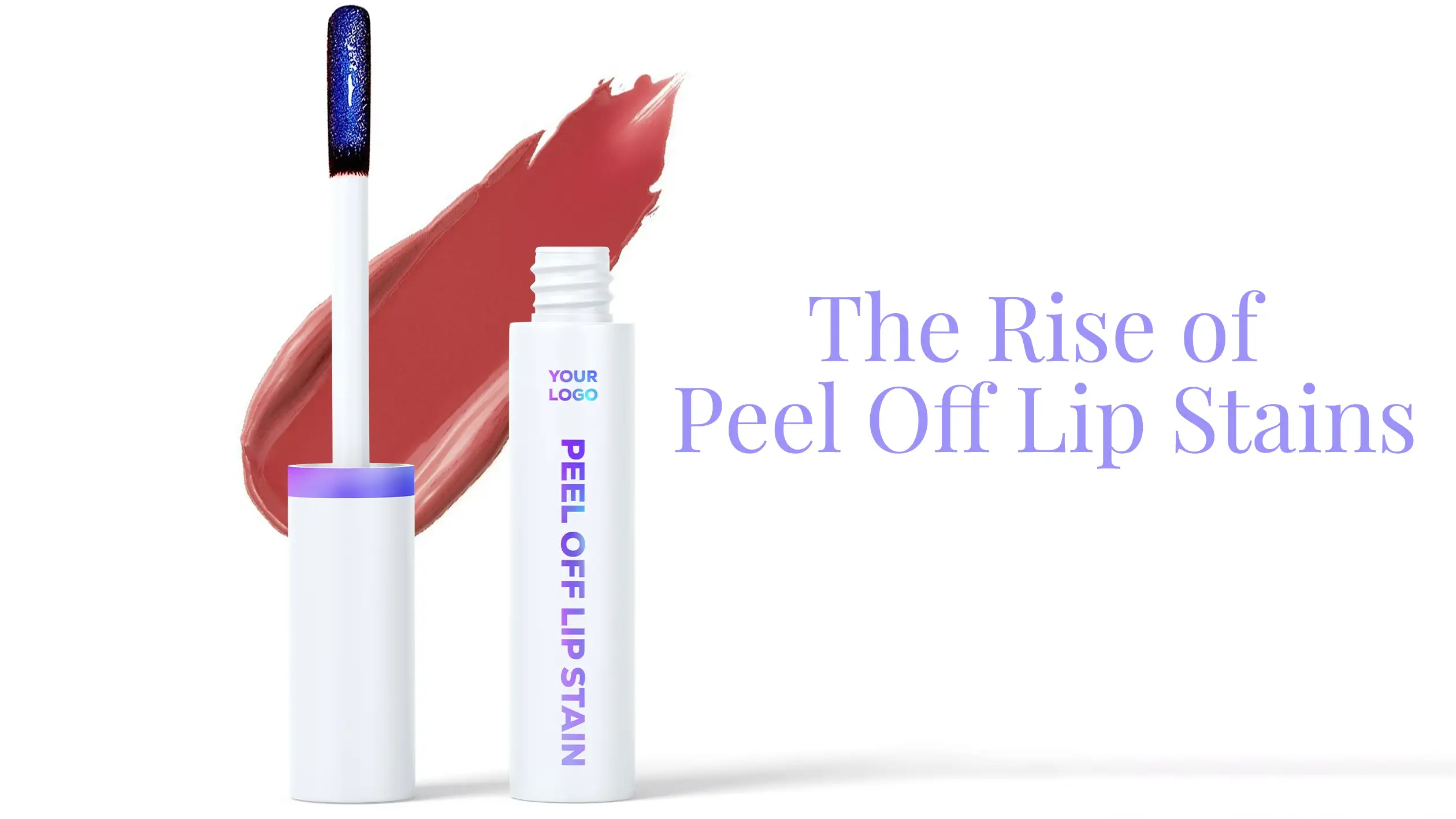
Peel off lip stains have emerged as one of the beauty industry’s most intriguing innovations in recent years. These products combine the fun, novelty appeal of a peel-off mask with the practicality of a long-wearing lip color. Consumers love the idea of applying a lip product, letting it set, then peeling off a film to reveal a long-lasting tint beneath. Brands, in turn, have noticed the viral popularity of peel-off stains on social media and are keen to jump on this trend. In this article, we’ll dive into how peel off lip stains work (the science behind their formulation), analyze market trends with regional insights (US, EU, Asia-Pacific), and explore OEM/ODM manufacturing opportunities. Whether you’re a beauty consumer curious about the hype or a business looking for opportunities, read on!

I. The Science Behind Long-Lasting Peel Off Lip Stains

Peel off Lip Stain

Peel off lip stains may look like magic, but there’s solid science at work. Their secret lies in specialized film-forming ingredients that create a flexible coat on the lips. One key player is polyvinyl alcohol (PVA) – a polymer that, when applied in a water-based formula, forms a thin film as it dries. Cosmetic chemists explain that PVA gives the formula its peelable effect: it adheres to the lips and dries into a layer that can be peeled off in one piece. This film carries the color pigments with it, leaving those pigments stained into the top layer of the lips for hours of wear. In essence, the film-former locks the color onto your skin.

Interestingly, the peel-off process can even lift away a bit of dead skin from the lips, giving a mild exfoliation in the process. Other synthetic polymers like acrylates copolymers are often added to strengthen the film and improve wear. In one formulation example, an acrylate copolymer was used alongside PVA to provide additional film-forming and waterproofing properties. The result is a lip stain that is transfer-proof and water-resistant once the film is removed – perfect for all-day color that doesn’t smudge.

Pigments and dyes are the next crucial component. Peel-off stains typically use high concentrations of colorants that actually penetrate the upper layer of lip skin. Many formulas use soluble dyes because dyes can seep into the skin’s keratin layer and leave a strong stain. For example, Red dye No. 27 or No. 21 (common in lip tints) belong to the xanthene dye class and are known for potent staining power. These dyes, when delivered via the film, impart a vivid tint that can last 8–12 hours on the lips. The downside of such dyes is that they’re sogood at staining that removing them can be tricky – a trade-off for longevity. By contrast, traditional lipsticks use insoluble pigments that sit on top of the skin, which are easier to wipe off but don’t last as long. In short, dyes imbue the lasting “tattoo” effect that peel off lip stains are loved for, whereas the peelable film ensures the application is neat and the color sets evenly.

To keep the formula comfortable (and lips healthy), chemists also include moisturizing and nourishing ingredients. Peel-off stains have a reputation for being a bit drying – after all, the film can occlude the lips and the staining dyes might feel less moisturizing than a creamy lipstick. To counter this, many products are infused with humectants and conditioners like hyaluronic acid and vitamin E. These ingredients attract moisture and provide a protective boost, so the lips don’t feel too parched after peeling off the film.

Finally, application and removal are part of the science too. A peel-off lip stain goes on like a thick gloss or gel, using a doe-foot applicator or brush to paint an even layer over the lips. Users have to wait a few minutes for the film to dry completely. During this time, the solvents evaporate, and the film-formers set in place. Once fully dry, you gently peel off the film from one corner. Done correctly, it comes off in one relatively satisfying piece. What’s left is a beautiful stain on the lips that feels weightless and won’t rub off. Early users reported that the first popular peel-off tints left a vibrant color that lasted up to 12 hours on the lips. It’s recommended to apply a lip balm after, since the stain itself is pigment with no emollient – but the color is now practically part of your lips, with no fear of transferring to coffee cups or face masks.

In summary, peel off lip stains work through a clever marriage of film-forming polymers and potent staining dyes. The film ensures a mess-free application and seals the color onto the lip skin, and when you peel it off you reveal a long-wearing hue that can outlast conventional lipsticks by far. It’s a true example of cosmetic science creating a fun user experience with functional benefits. Now that we understand the “how,” let’s look at the “how many” – as in, how popular have these products become and what does the market for peel-off lip stains look like around the world?

II. The Market Trends of Peel Off Lip Stains Around the World

The peel-off lip stain trend first caught fire in the mid-2010s thanks to K-beauty (Korean beauty) influencers, but it has since grown into a global phenomenon. Today, the lip stain market as a whole is booming, with peel-off formats contributing to the excitement in the category. In this section, we’ll break down the market growth and regional preferences in North America (especially the US), Europe, and Asia-Pacific.

On a global scale, lip stains (including peel-off types) have seen strong growth in recent years. According to market research, the worldwide lip stain market size was about $7.5 billion in 2024 and is projected to reach $8.0 billion in 2025, growing around 7% annually. That upward trajectory is expected to continue; one analysis forecasts the market to hit roughly $10 billion by the early 2030s.

The growth is fueled by several factors:

  1. Consumers’ shift toward long-wearing makeup (thanks in part to mask-wearing and busy lifestyles)
  2. Endless social media hype (TikTok made several peel-off tints go viral)
  3. Product innovations making stains more accessible and comfortable
  4. A “natural look” trend: many people want the blotted, just-bitten lip effect that stains provide, as opposed to heavy lipstick.

A. North America and Europe: Demand for Long-Lasting Color

In North America, and particularly the United States, lip stains have carved out a significant market. In fact, North America currently holds the largest share of the global lip stain market (as of 2024). Several factors contribute to this. First, consumers in the U.S. and Canada have high per-capita spending on cosmetics and love trying new makeup innovations. The promise of a long-lasting, transfer-proof lip color appeals to anyone tired of reapplying lipstick throughout the day. Peel off lip stains gained traction in the West after influencers and beauty gurus on YouTube and Instagram featured products like Berrisom’s lip tint pack and later the blue Wonderskin Peel & Reveal lip stain.

North American shoppers also tend to look for “problem-solving” makeup – and a peel-off stain solves the problem of lip color that smudges or fades. Beauty enthusiasts are actively seeking lip colors that last through meals, workouts, even overnight. This region also has a robust e-commerce presence, so even niche K-beauty products quickly became available via Amazon and other online retailers, feeding the trend further.

Europe follows closely behind North America in terms of lip stain market size. European consumers have similarly embraced the idea of low-maintenance, all-day lip color, though the trends there often emphasize clean beauty and subtlety. In countries like France and Germany, for instance, there’s a preference for more natural-looking tints and ingredients that meet strict EU cosmetic regulations. (The EU has stringent rules on certain colorants and chemicals, so European brands have been formulating stains that use approved dyes and skin-friendly ingredients.) The overall trend toward natural and organic cosmetics is strong in Europe, which aligns with lip stains – many stains are water-based and can be formulated with botanical extracts and without heavy waxes or oils. Industry reports note that consumers increasingly demand natural ingredients and sustainable packaging in their beauty products, and lip stains are part of that wave. We’re seeing European brands marketing peel-off and regular lip tints as clean, vegan, and eco-friendly, which attracts a segment of customers who might avoid traditional lipsticks containing petrolatum or carmine pigment. Additionally, European makeup trends lean toward that effortless, “blotted” lip look (think more stain and balm, less high-gloss or ultra-matte), which peel-off stains deliver. While Europe’s growth in this segment is steady rather than explosive, the interest is definitely there – especially as younger consumers on social media try out looks they see from American or Asian influencers.

B. Asia-Pacific: K-Beauty Origins and Rapid Growth

It’s no surprise that the Asia-Pacific region is where peel off lip stains truly took off first – and it remains a hotbed of innovation and demand. This region, encompassing beauty powerhouses like South Korea, China, and Japan, is experiencing the fastest growth in the lip stain market globally. The story really begins in South Korea: back in 2014, Korean brands such as Berrisom introduced the world to the concept of a peel-off “lip pack.” In Korean, a “pack” refers to a peel-off mask, and that idea was applied to lip color with shocking yet thrilling results. Early adopters in Seoul could smear on a syrupy gloss, wait, peel it, and reveal neon-bright stained lips – it felt “revolutionary, a little startling, and potentially frustrating” at first, but it quickly caught on. K-beauty enthusiasts loved that it gave a cute, popsicle-stained lip look that wouldn’t budge (perfect for the gradient lip trend popular across Asia, where the color is concentrated in the center of the lips). Within a couple of years, peel-off lip tints became a staple in many Asian markets. Chinese brands followed the trend, and the broader Asian consumer base – especially Gen Z and Millennials – jumped on these fun long-wear tints.

Several factors make Asia-Pacific a fertile ground for peel-off lip stains. Culturally, there has long been an emphasis on lightweight, natural-looking makeup (as opposed to heavy, opaque lipstick), so lip tints in general were already popular. The peel-off variant was a novel twist that fit right in with that aesthetic and offered a practical benefit for humid climates (since the stain doesn’t melt or smear in heat). Additionally, rising disposable incomes in many Asia-Pacific countries have expanded the beauty market rapidly. Young consumers in places like China, Indonesia, and Thailand are very trend-aware thanks to social media, and they often seek the latest “viral” products. Peel-off lip stains, frequently showcased by beauty bloggers and influencers across YouTube, WeChat, TikTok (Douyin in China), and Instagram, have enjoyed a lot of buzz. It helps that some of the most innovative formulas originate in Asia – for example, Japanese brands have explored peel-off stains with more natural dyes, and Korean companies continue to refine the texture and scent to improve user experience.

In summary, Asia-Pacific leads in innovation and adoption of peel-off lip stains, North America drives large sales with its enthusiastic and influential consumer base, and Europe embraces the trend with an eye toward clean formulations and subtle looks. Across all regions, the common thread is that people want lip color that lasts without constant touch-ups, and peel-off stains deliver on that promise. The market trends suggest that this format isn’t a mere fad; it has the potential to become a staple product type in the lip category. For beauty brands, this presents a compelling opportunity – which brings us to the next part of our discussion: manufacturing these products. How can brands create their own peel-off lip stains, and what should they consider?

III. Opportunities for Peel Off Lip Stains

Given the popularity of peel off lip stains, many cosmetics brands – from big established names to indie startups – are exploring adding these products to their lineup. However, developing a successful peel-off lip stain requires specialized know-how in formulation and production. This is where partnering with an OEM/ODM cosmetics manufacturer can be incredibly valuable. (OEM means Original Equipment Manufacturer – essentially contract manufacturers who produce your formula – and ODM means Original Design Manufacturer – those who can both design and manufacture product concepts for brands.) Let’s discuss the opportunities and considerations in manufacturing peel-off lip stains, and how brands can leverage OEM/ODM partnerships to ride this trend.

Why consider an OEM/ODM for lip stains?

For one, the formulation of a peel-off lip stain is more complex than a typical lipstick or gloss. As we covered in the science section, it involves balancing film-formers, solvents, and pigments just right. An experienced OEM manufacturer will have cosmetic chemists on hand who have likely already developed similar film-tint formulas and can customize them to a brand’s needs. This dramatically cuts down R&D time for the brand. Moreover, specialized equipment may be needed to handle the mixing of high-viscosity polymer gels or to fill the product into unique packaging (some peel-off tints use aluminum tubes, others use airtight bottles due to the formula’s drying nature). A capable OEM will have the production lines ready for this.

There’s also the matter of regulatory compliance and testing. Long-wear dyes and films must be dermatologically tested (especially since they sit on the skin for hours). Different countries have different rules – e.g., the EU bans certain colorants, or a market like China might require specific registration processes. An OEM/ODM partner familiar with international regulations can ensure the lip stain formula meets all safety standards (for example, being CPSR certifiedfor the EU, or FDA-registered for the US). This allows the brand to launch globally with confidence in product safety and compliance.

From a marketing perspective, working with an ODM can help a brand create a unique peel-off tint that stands out. Perhaps you want a custom fragrance for your lip stain, or a special active ingredient (imagine a peel-off lip mask that also plumps the lips or has anti-aging coenzyme Q10 – the possibilities are endless). OEM/ODM labs can often incorporate such requests. They can also assist with shade matching – creating a range of colors that suits your target market, whether that’s bold reds and purples or more natural pinks and corals. Another opportunity is in packaging design: a good ODM will have the ability to source or even design custom applicators, tubes, and branding that make your product look as unique as it is. Given that unboxing and appearance are a big part of the social media appeal, packaging shouldn’t be an afterthought.

Lastly, consider scalability and cost. If you’re testing the waters with a new peel-off lip tint, you might want a smaller batch to start – then ramp up if it sells well. Many OEM manufacturers offer flexible production runs (though minimum order quantities, MOQs, will apply as we’ll detail for Ausmetics below). The benefit is you don’t need to invest in setting up your own factory or buying raw materials in bulk; the OEM handles that, and you pay per unit, which often ends up more economical for small-to-mid scale brands. In essence, the OEM route turns manufacturing into a variable cost (per batch) rather than a fixed cost (factory overhead), which is attractive when entering a new product category with some uncertainty.

To sum up, the surge in interest for peel off lip stains translates to a golden opportunity for brands – but to seize it, smart manufacturing decisions are key. Partnering with a seasoned OEM/ODM lip stain manufacturer allows brands to develop high-quality, compliant, and distinctive products without starting from scratch. It’s a way to fast-track innovation and get to market while the trend is hot (and, judging by market growth, it will stay hot for quite some time).

Next, let’s look at a real example of what an OEM/ODM partner can offer. Ausmetics is one such manufacturer that has positioned itself as a leader in custom cosmetics production – including peel-off lip stains. In the next section, we’ll profile Ausmetics’ capabilities and how they align with what we’ve discussed, from R&D strength to flexible MOQs and more.

IV. Ausmetics – OEM/ODM Cosmetics Excellence for Peel Off Lip Stains

As an experienced OEM lip stain manufacturer, Ausmetics specializes in helping brands create products like peel-off lip tints from concept to shelf. Ausmetics is an Australian-invested cosmetics contract manufacturer based in Guangzhou, China, with over 27 years of expertise in OEM/ODM production (founded in 1998). They act as a behind-the-scenes partner for many brands worldwide – essentially a peel-off lip stain supplier that can formulate, produce, and package your custom lip products. If you’re looking for custom lip tint production with reliable quality and support, Ausmetics exemplifies what a top-tier OEM/ODM can provide. Let’s break down Ausmetics’ capabilities and services, highlighted with a few key points:

📍 Location & Global Reach: Based in Guangzhou, China, Ausmetics operates a large-scale facility that serves over 30+ countries and 300+ brands globally. Being in China’s manufacturing hub means efficient supply chains for packaging and ingredients, as well as convenient export logistics.

Certifications & Quality Standards: Ausmetics meets rigorous quality and safety standards. They are ISO 22716 (Cosmetic GMP) certified and FDA-registered, ensuring good manufacturing practices. They also hold certifications like GMPC, Sedex (ethical trade certification), and SGS testing approvals. Products made by Ausmetics can be accompanied by necessary safety reports (they mention DERMA testing and CPSR compliance for global markets). In short, they tick all the boxes for quality assurance, which is crucial for something like a lip stain that consumers apply to their skin.

🧪 R&D Strengths: Ausmetics prides itself on strong research and development capabilities. They are even a member of the IFSCC (International Federation of Societies of Cosmetic Chemists), staying at the forefront of cosmetic science. Their R&D team can create formulations tailored to your specifications or even replicate a formula from a sample you provide. This is ideal for developing a unique peel-off lip stain – you could, for example, send them a benchmark product and ask for improvements (more moisturizing, different color payoff, etc.), and their chemists will iterate a custom formula. Throughout development, they consider consumer trends, market positioning, and stability requirements, giving you a scientifically sound and market-ready product. Pilot batching and rigorous quality control tests are done to ensure the formula works perfectly before full production.

📦 Flexible MOQ (Minimum Order Quantity): Unlike some manufacturers that demand very large runs, Ausmetics offers flexibility for smaller brands. Their standard MOQ is around 10,000 units per product, but they provide solutions to effectively halve that. For example, they allow an order of 10,000 units to be split into 2 shades x 5,000 units each, or they can produce 10,000 units but deliver in two batches of 5,000 (with a short interval). This means you could launch with two colors of peel-off lip stain (5k each) under one production order, which is a great option for startups testing product demand. Such flexibility lowers the barrier to entry for creating custom lip tints.

🌿 Sustainability and Clean Beauty: Ausmetics is attuned to the sustainability movement in cosmetics. They can formulate 100% vegan, cruelty-free products and offer formulations that are free of parabens, sulfates, silicones, SLS/SLES, and even palm oil. If having a natural or clean peel-off lip stain is your goal, they have the ingredient sourcing to support that (they work with renowned raw material suppliers from around the world and ensure all ingredients have proper safety documentation). In terms of packaging, Ausmetics can provide eco-friendly options like biodegradable materials or PCR (post-consumer recycled) plastics. They’ve also invested in environmental measures at their factory – for instance, they have wastewater treatment facilities to minimize environmental impact from production. This focus on sustainability can be a strong selling point for your brand’s story.

🚚 Efficient Lead Times: In the fast-paced beauty market, speed matters. Ausmetics strives for quick turnaround – they state that sample inquiries are answered within 3 days, meaning if you contact them to develop a peel-off lip stain, you’ll get initial feedback or a plan almost immediately. Once formulations and packaging are decided, their production is also timely: standard packaging components (bottles, tubes) can be sourced in about 25 days, and even custom or special packaging in around 35 days. Manufacturing and filling of the product would be coordinated alongside that. In practice, this means you could go from concept to finished product relatively fast – potentially launching a product in just a few months, depending on formula approval and shipping. Ausmetics’ ability to handle everything from formulation to filling to QC and export documentation streamlines the process significantly.

In essence, Ausmetics offers end-to-end OEM/ODM services that cover all the critical aspects we discussed earlier: strong formulation expertise, knowledge of global standards, customization, flexible production, and an eye on sustainable, modern beauty trends. Partnering with such a manufacturer allows a brand to focus on marketing and distribution, while the heavy lifting of product development and production is managed by experts.

For any beauty brand (or even a non-beauty brand looking to do a promotional lip product) considering a peel-off lip stain, the takeaway is clear: you don’t have to build a lab or factory yourself. Companies like Ausmetics provide a way to create a high-quality, long-lasting peel-off lip stain product with your own branding – with minimal hassle. From choosing that perfect pantone shade of lip tint, to ensuring the formula has the desired moisturizing feel, to getting the right packaging that speaks to your brand aesthetic, a good OEM partner is invaluable.

V. Conclusion: Embrace the Peel-Off Trend with the Right Partner

Peel off lip stains represent the intersection of fun innovation and practical functionality in the cosmetics world. We’ve explored how these products work (the science of film-formers and dyes), why consumers love them (long-lasting color, viral appeal), and how the market is growing across the U.S., Europe, and Asia. For brands and businesses, the rise of peel-off lip stains is an opportunity to ride a growing wave – but success will depend on the ability to deliver a quality product that meets consumer expectations.

If you’re inspired to launch your own long-lasting peel-off lip stain line, the good news is that you don’t have to go it alone. By collaborating with an experienced OEM/ODM manufacturer like Ausmetics, you can turn your concept into reality efficiently and confidently. Ausmetics’ capabilities – from R&D to production to compliance – make them a strong ally for any brand ready to dive into this trend. They can help with custom lip tint production, ensuring your product is uniquely yours while adhering to the highest standards of quality.

Ready to create your own peel-off lip stains? 📞 Get in touch with Ausmetics today and let their OEM/ODM experts guide you from concept to launch. Your brand’s custom long-wear lip tint could be the next big thing – and we can’t wait to see it happen.

Jack Li

Product Marketing Consultant

With a unique blend of creative intuition and strategic prowess, Jack Li stands out in the beauty industry as a thought leader and visionary. Over his accomplished career, he has driven successful marketing and branding strategies for both emerging startups and well-established companies. His approach to consulting focuses on recognizing and capitalizing on the latest trends to help clients create distinctive brand identities that captivate audiences.

Share This Post

Talk To An Expert
Get your free sample

Table of Contents

Get Free Sample Now