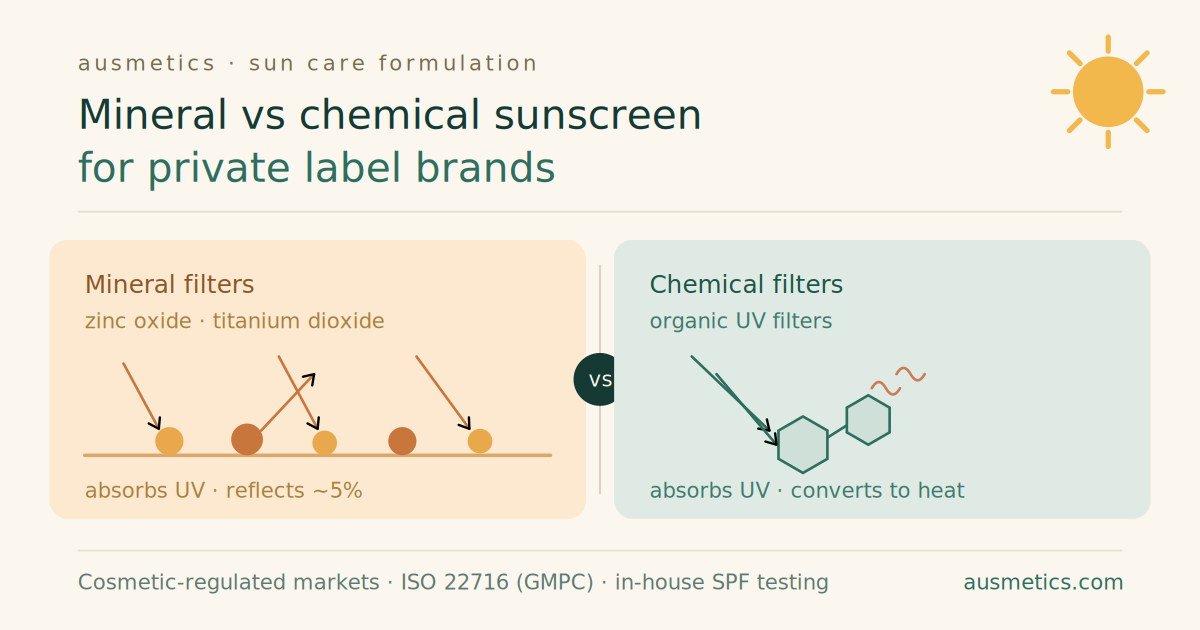
Niewiele decyzji dotyczących formuły kształtuje linię kosmetyków przeciwsłonecznych w takim stopniu jak wybór pomiędzy: Mineralny krem przeciwsłoneczny marki własnej i chemiczny. The mineralny czy chemiczny filtr przeciwsłoneczny pytanie wpływa na wrażenia z produktu, jak fotografuje się na skórze, na jakich rynkach możesz sprzedawać, oraz jak złożona jest formuła, którą można wyprodukować na dużą skalę. Do wszelkich odpraw dotyczących marki, do których producent jest przeznaczony produkcja filtrów przeciwsłonecznych pod marką własną, wczesne wykonanie tej czynności pozwala uniknąć kosztownej późniejszej zmiany formuły.
Przed podjęciem jakiejkolwiek decyzji dotyczącej formuły należy rozstrzygnąć jedną kwestię: Klasę regulacyjną filtra przeciwsłonecznego ustala się na poziomie krajowym lub bloku handlowego, nie według kontynentu, i różni się ona w zależności od rynku. Większość świata reguluje filtry przeciwsłoneczne jako: kosmetyk — w ramach UE Regulacja (Ec) 1223/2009 lub wzorowane na nim ramy – podczas gdy nieliczne rynki traktują je jako lek lub dobro terapeutyczne. Ten przewodnik jest przeznaczony dla rynków regulowanych produktami kosmetycznymi; zawsze potwierdzaj zasady obowiązujące na Twoim konkretnym rynku docelowym.
Poniżej znajduje się praktyczne porównanie dla właścicieli marek: jak faktycznie działają obie rodziny filtrów, kompromisy w recepturze, które decydują o gotowym produkcie, w jaki sposób Twój rynek docelowy dyktuje, jakich filtrów możesz użyć, jak dopasować formułę do kupującego, oraz etapy testowania i zapewniania zgodności, które muszą nastąpić przed uruchomieniem. Aby uzyskać pełny obraz wprowadzenia na rynek linii kosmetyków przeciwsłonecznych – pozycjonowanie, trasa formuły, budżet, i wybór dostawcy — zobacz nasz przewodnik na temat jak założyć markę kosmetyków przeciwsłonecznych.
I. Co "Minerał" oraz "Chemiczny" Właściwie krem przeciwsłoneczny jest średni
Każdy filtr przeciwsłoneczny chroni skórę Filtry UV, a filtry te dzielą się na dwie rodziny. Filtry mineralne — zwane także filtrami fizycznymi lub nieorganicznymi tlenek cynku oraz dwutlenek tytanu. Filtry chemiczne, dokładniej nazywane filtrami organicznymi, zawierać składniki takie jak awobenzon, oktynoksat, oktokrylen, sałatka gejowska, oktyzalat, oraz nowsze cząsteczki o szerokim spektrum działania, takie jak bemotrizinol i bisoktrizol.
Marketing często mówi o filtrach mineralnych "odbijać" UV jak lustro, natomiast filtry chemiczne "absorbować" To. Nauka jest mniej uporządkowana. Recenzowane pomiary pokazują, że tlenek cynku i dwutlenek tytanu odbijają tylko około 4–5% padającego promieniowania UV w całym spektrum i chronią głównie poprzez jego absorpcję, w ten sam sposób, w jaki robią to filtry organiczne, i a 2025 analiza produktów mineralnych dostępnych na rynku doprowadziła do tego samego wniosku. W praktyce obie rodziny działają głównie poprzez pochłanianie promieniowania UV; znaczące różnice dotyczą odczuć, stabilność, łagodność, skończyć, i leczenie regulacyjne, nie jest to podstawowy mechanizm.
W rodzinie minerałów, oba filtry nie są wymienne. Tlenek cynku to jedyny filtr mineralny, który sam pokrywa pełny zakres promieni UVB do długich UVA, dlatego najbardziej zakotwicza szerokie spektrum formuły mineralne. Dwutlenek tytanu jest silny wobec UVB i krótkiego UVA, ale słaby wobec długiego UVA, dlatego formulatorzy zwykle łączą go z cynkiem, zamiast polegać na nim samym. Dzięki połączeniu formuła może mieć niższą całkowitą zawartość minerałów, co zmniejsza biały nalot.
II. Kompromisy w formułowaniu, które kształtują produkt końcowy
Na poziomie produkcyjnym, wybór pomiędzy tymi dwiema rodzinami jest w rzeczywistości wyborem pomiędzy dwoma bardzo różnymi problemami w zakresie formułowania.
A. Formułowanie mineralnych filtrów przeciwsłonecznych
Mineralne substancje aktywne to nierozpuszczalne proszki, więc głównym wyzwaniem jest dyspersja: Cząsteczki tlenku cynku i dwutlenku tytanu muszą być równomiernie rozłożone i zapobiegać zlepianiu się, ponieważ aglomeracja tworzy luki w filmie ochronnym i nierówny SPF. Cząstki powlekane powierzchniowo, odpowiedni system emulgatorów, i staranne przetwarzanie całej materii. Formuły mineralne są zwykle gęstsze i mogą sprawiać wrażenie cięższych, i niosą ze sobą dobrze znane biały odlew, najbardziej widoczny w przypadku cząstek innych niż nano i na głębszych odcieniach skóry. Cząsteczki w skali nano zmniejszają ten efekt; w UE, każdy filtr nanomateriałowy musi być oznaczony "[nano]" obok jego nazwy. Zaletą jest fakt: oba minerały są wysoce fotostabilne, delikatny, i dobrze nadaje się do skóry wrażliwej, dziecko, i produkty po zabiegowe.
B. Formułowanie chemicznych filtrów przeciwsłonecznych
Filtry organiczne przynoszą odwrotny profil. Rozpuszczają się w fazie olejowej lub wodnej, co tworzy lekkie tekstury, Spray, i przejrzyste żele są znacznie łatwiejsze do osiągnięcia, i efektywniej osiągają wysokie wartości SPF. Haczyk jest fotostabilność: jakieś filtry, zwłaszcza awobenzon, rozkładają się pod wpływem światła słonecznego, jeśli nie zostaną ustabilizowane, zazwyczaj poprzez połączenie ich z oktokrylenem lub fotostabilnym filtrem o szerokim spektrum działania, takim jak bemotrizinol. Dobrze zbudowany wzór chemiczny stanowi równoważenie kombinacji filtrów, solubilizatory, i stabilizatory. Niektóre starsze filtry organiczne również budzą obawy konsumentów dotyczące wrażliwości skóry, wchłanianie ogólnoustrojowe, czy rafy koralowe, co kształtuje sposób, w jaki marka je pozycjonuje.
C. Hybrydowy środek
Wiele nowoczesnych filtrów przeciwsłonecznych nie jest ani czysto mineralnych, ani czysto chemicznych. Formuły hybrydowe połącz filtr mineralny z organicznym, lub ze wzmacniaczami UV, aby zrównoważyć delikatność i fotostabilność cynku z jaśniejszym wykończeniem substancji organicznych, często pozwala na mniejszą zawartość minerałów i mniej białego nalotu. Dla marki, która chce pozycjonowania minerałów bez uczucia ciężkości, hybryda jest często najbardziej komercyjną odpowiedzią.
| Atrybut | Minerał (tlenek cynku / dwutlenek tytanu) | Chemiczny (filtry organiczne) |
|---|---|---|
| Mechanizm pierwotny | Pochłania głównie promieniowanie UV; odzwierciedla tylko ~ 4–5% | Pochłania promieniowanie UV, zamienia go na ciepło |
| Szerokie spektrum samo w sobie | TAk, z tlenkiem cynku | Zależy od filtra; często wymaga kombinacji |
| Tekstura i wykończenie | Grubszy; możliwy biały odcień | Lekki; zwykle niewidoczny |
| Fotostabilność | Wysoki | Różnie; awobenzon wymaga stabilizacji |
| Wrażliwy / skóra dziecka | Generalnie dobrze tolerowany | Bardziej prawdopodobne, że użądli lub podrażni |
| Łatwość stosowania wysokiego SPF | Trudniej bez dużego obciążenia | Łatwiejsze i bardziej eleganckie |
| Najlepsze formaty | Kremy, patyki, produkty barwione | Płyny, Spray, przezroczyste żele, wysoki filtr SPF |
| Typowe pozycjonowanie | Czysty, wrażliwy, dziecko, świadomy rafy | Codzienne noszenie, sport, kosmetycznie elegancki |
Zaleta ausmetyki: Nawet dyspersja minerałów i niezawodna fotostabilność chemiczna to dokładnie to, co wyróżnia komfort, równomiernie chroniąc filtr przeciwsłoneczny przed kredowym lub słabo działającym. Z więcej niż 28 lat doświadczenia w formułowaniu OEM/ODM i wewnętrznych laboratoriach, Ausmetics rozwija minerał, chemiczny, i hybrydowe Formuła filtra przeciwsłonecznego OEM dla marek sprzedających na rynkach regulowanych kosmetykami.
III. Twój rynek decyduje, jakich filtrów możesz użyć
To, które filtry możesz legalnie stosować, zależy od tego, jak rynek docelowy reguluje kwestię filtrów przeciwsłonecznych, a rynki regulowane produktami kosmetycznymi zazwyczaj oferują szerszą ofertę, bardziej nowoczesna paleta. Lista pozytywna zawarta w załączniku VI UE dopuszcza ponad dwa tuziny filtrów UV – ok 29 — w porównaniu z mniej więcej 16 w amerykańskiej monografii leków. Lukę tę stanowią zaawansowane filtry o szerokim spektrum działania, szeroko stosowane na rynkach kosmetycznych, Jak na przykład bemotryzynol (Tinosorb S), bisoktrizole (Tinosorb M), i filtry Mexoryl, kilka z nich jest bardziej fotostabilnych niż awobenzon. Szczególnie do formuł chemicznych i hybrydowych, oznacza to, że marki na rynkach kosmetycznych mogą budować eleganckie produkty, fotostabilne produkty o szerokim spektrum działania, których nie mogą mieć marki na niektórych rynkach regulowanych narkotykami.
Filtry mineralne tną w drugą stronę. Tlenek cynku i dwutlenek tytanu są akceptowane niemal wszędzie, w tym jako dwie substancje czynne, które organy regulacyjne na bardziej rygorystycznych rynkach traktują najbardziej przychylnie. Dobrze przygotowana formuła mineralna jest zatem najbardziej przenośna na różnych rynkach, co jest pomocne, jeśli planujesz zarejestrować jeden produkt w kilku regionach lub wejść na rynki, na których obowiązują bardziej rygorystyczne przepisy dotyczące filtrów organicznych.
Wybór filtra może nawet zadecydować o drodze regulacyjnej. W Kanadzie, filtr przeciwsłoneczny zawierający wyłącznie filtry mineralne może zostać zakwalifikowany jako naturalny produkt zdrowotny, natomiast ten stosujący filtry organiczne traktowany jest jako lek dostępny bez recepty. Geografia jest często wynikiem decyzji dotyczącej sformułowania, nie tylko ograniczenie.
W UE, produkt może ubiegać się o ochronę o szerokim spektrum tylko wtedy, gdy jego ochrona przed promieniowaniem UVA wynosi co najmniej jedną trzecią jego SPF i jego krytyczna długość fali sięga przynajmniej 370 nm. A ponieważ Stany Zjednoczone (lek OTC) i Australia (dobro terapeutyczne w rozumieniu TGA) wymagają produkcji leków o jakości farmaceutycznej, ochrony przeciwsłonecznej dla tych dwóch rynków jest całkowicie poza produkcją kontraktową kosmetyków.
| Rynek | Jak regulowany jest filtr przeciwsłoneczny |
|---|---|
| Unia Europejska | Kosmetyk — rozporządzenie (Ec) 1223/2009 |
| Zjednoczone Królestwo | Kosmetyki – brytyjskie rozporządzenie dotyczące kosmetyków |
| Azja Południowo-Wschodnia (ASEAN) | Kosmetyki – dyrektywa ASEAN dotycząca kosmetyków |
| Brazylia | Zarejestrowany "Stopień 2" kosmetyk (ANVISA) |
| Państwa Zatoki Perskiej (GCC) | Kosmetyk – GCC / Standardy GSO |
| Stany Zjednoczone | Lek OTC (Monografia FDA) |
| Kanada | Lek dostępny bez recepty lub naturalny produkt zdrowotny |
| Australia | Terapeutycznie dobre (TGA) |
| Japonia | Quasi-narkotyk |
| Korea Południowa | Kosmetyk funkcjonalny |
IV. Dopasowanie formuły do Twojej marki i kupującego
Mając na uwadze naukę i zasady, praktyczne pytanie brzmi, która formuła pasuje do Twojego kupującego, Twoje pozycjonowanie, i twój format.
A. Rodzaj skóry i kupujący
Dla wrażliwych, reaktywny, skłonny do trądziku, dziecko, lub skórę po zabiegu, minerał wygrywa pod względem tolerancji — tlenek cynku jest delikatny i kojący, a formuły mineralne rzadziej powodują szczypanie i podrażnienie oczu. Do noszenia na co dzień, sport, i kupujących, którzy po prostu nie zaakceptują żadnych pozostałości, formuły chemiczne lub hybrydowe zapewniają zapalniczkę, bardziej niewidoczne wykończenie. Dla marek budowanych specjalnie z myślą o najmłodszych lub najbardziej reaktywnych użytkownikach, nasz przewodnik po formułuje kremy z filtrem przeciwsłonecznym dla dzieci i skóry wrażliwej idzie głębiej.
B. Odcień i wykończenie skóry
Biały odlew nie jest drobnym detalem kosmetycznym; nieproporcjonalnie wpływa na głębsze odcienie skóry i jest głównym powodem, dla którego konsumenci rezygnują z mineralnych filtrów przeciwsłonecznych. Marki obsługujące szeroką gamę odcieni skóry często wybierają bazę chemiczną lub hybrydową, lub zabarwiona formuła mineralna, która wykorzystuje tlenki żelaza w celu zneutralizowania odlewu, jednocześnie zapewniając ochronę przed światłem widzialnym. Dopasowanie wykończenia do rzeczywistej bazy klientów jest decyzją zarówno komercyjną, jak i dotyczącą receptury.
C. Pozycjonowanie, roszczenia, i formatować
Pozycjonowanie zwykle wskazuje w jedną lub drugą stronę. Czysty, skóra wrażliwa, dziecko, i linie świadome rafy Lean Mineral; wydajność, wysoki filtr SPF, sport, i przyjazne dla makijażu linie dzienne chude chemiczne lub hybrydowe. Jedna uwaga dotycząca roszczeń: terminy takie jak "bezpieczny dla rafy" są językiem marketingu, nieokreślone prawnie standardy, formułuj więc ostrożnie twierdzenia dotyczące ochrony środowiska i sprawdź zasady obowiązujące na rynku docelowym. Format też ma znaczenie — kije, balsamy, gęste kremy, i produkty barwione pasują do filtrów mineralnych, podczas oprysków, przezroczyste żele, płyny, a lekkie produkty o wysokim SPF są znacznie łatwiejsze do zbudowania z filtrami organicznymi.
| Jeśli Twoim priorytetem jest… | Pochyl się w stronę… |
|---|---|
| Delikatność dla wrażliwych, dziecko, lub skórę po zabiegu | Minerał |
| Niewidoczne wykończenie dla wszystkich odcieni skóry | Chemiczne lub hybrydowe (lub zabarwiony minerał) |
| Czysty / pozycjonowanie uwzględniające rafę | Hybryda mineralna lub mineralna |
| Wysoki SPF i lekka konsystencja | Chemiczne lub hybrydowe |
| Rozpylać, mgła, lub w formie przezroczystego żelu | Chemiczny |
| Jedna formuła możliwa do rejestracji na wielu rynkach | Hybryda mineralna lub nowoczesna z filtrem |
Zaleta ausmetyki: Ponieważ prawidłowa odpowiedź jest tak często "to zależy," współpraca z producentem, który formułuje produkty we wszystkich trzech podejściach, ma znaczenie. Ausmetics rozwija minerał, chemiczny, hybrydowy, i przyciemniane filtry przeciwsłoneczne w wielu formatach – kremy, płyny, patyki, i spraye — dla pielęgnacja skóry marki własnej i marki produktów do opalania na rynkach regulowanych kosmetykami.
V. Testowanie, Roszczenia, i zgodność przed uruchomieniem
Niezależnie od tego, którą trasę wybierzesz, produkt musi zostać przetestowany i udokumentowany, zanim będzie mógł spełniać swoje roszczenia.
A. SPF i UVA są badane oddzielnie
Ochrona SPF i UVA to dwa różne punkty końcowe, mierzone różnymi metodami ISO — to rozróżnienie, które warto uzyskać. Współczynnik ochrony przeciwsłonecznej określa się in vivo w ramach ISO 24444, metodę referencyjną opartą na MED; metodą dwupłytkową in vitro, ISO 23675:2024, został również opublikowany. Odrębnie ocenia się ochronę przed promieniowaniem UVA: in vivo przez ISO 24442, metoda trwałego przyciemniania pigmentu, która leży u podstaw japońskiej klasyfikacji PA, lub in vitro ISO 24443, co daje wartości UVA-PF i krytycznej długości fali, które UE wykorzystuje do znakowania. Nowsza metoda hybrydowa, ISO 23698:2024 spektroskopia rozproszono-odbiciowa, przechwytuje SPF, UVA-PF, i krytycznej długości fali w jednym procesie. Aby uzyskać pełniejszy opis tych metod i tego, co mierzy każda z nich, zobacz nasze wyjaśnienie na jak działa badanie SPF.
B. Roszczenia, stabilność, oraz dokumentację regulacyjną
Twierdzenia dotyczące wodoodporności wymagają własnych testów, a każda formuła wymaga danych dotyczących stabilności i konserwacji oraz określonego okresu po otwarciu. Dla rynków kosmetycznych, plik zgodności zazwyczaj zawiera ocenę bezpieczeństwa przeprowadzoną przez wykwalifikowaną osobę oraz plik informacji o produkcie; w UE towarzyszą one powiadomieniu na portalu CPNP, Rynki ASEAN korzystają z własnych systemów powiadomień, a Brazylia wymaga rejestracji ANVISA. W pełni uzasadnione twierdzenia dotyczące SPF i szerokiego spektrum działania, oraz unikanie oświadczeń przypominających narkotyki na rynkach kosmetycznych, utrzymuje uruchomienie po prawej stronie reguł.
C. Na co zwrócić uwagę u producenta
Specjalnie do ochrony przeciwsłonecznej, najważniejsze referencje to kosmetyczne GMP i rzeczywiste możliwości przeprowadzania testów we własnym zakładzie, nie jest to certyfikat obejmujący całą firmę, który niewiele mówi o samej pielęgnacji przeciwsłonecznej. Szukać ISO 22716 (GMPC) produkcja i wewnętrzne testy SPF, co pozwala partnerowi udoskonalić formułę i zweryfikować wydajność w trakcie opracowywania, a nie dopiero na końcu. Nasz przewodnik po wybór niezawodnego producenta filtrów przeciwsłonecznych marki własnej zamienia te dane uwierzytelniające w pełną listę kontrolną weryfikacji.
Zaleta ausmetyki: Ausmetics produkuje zgodnie z ISO 22716 (GMPC) with in-house SPF testing and an R&D team led by Dr. Jadir Nunes, były globalny prezes IFSCC. Dla marek działających na rynkach regulowanych kosmetykami, to połączenie umożliwia zarówno zgodną z dokumentacją, jak i iterację receptury potrzebną silnemu filtrowi przeciwsłonecznemu. Możesz przejrzeć nasze Zapewnienie jakości standardy dla pełnego obrazu.
Często Zadawane Pytania
Czy filtr mineralny jest lepszy od chemicznego??
Żadne z nich nie jest z natury lepsze; właściwy wybór zależy od kupującego, Twoje pozycjonowanie, i Twój rynek docelowy. Obie rodziny chronią głównie poprzez pochłanianie promieni UV. Formuły mineralne są delikatniejsze, bardziej fotostabilny, i bardziej przenośne na różnych rynkach, odpowiedni dla skóry wrażliwej, dziecko, i czyste linie. Formuły chemiczne i hybrydowe są lżejsze, bardziej niewidoczny w przypadku różnych odcieni skóry, i łatwiej osiągnąć wysoki SPF, który pasuje do linii codziennego noszenia i wydajności.
Dlaczego mineralne filtry przeciwsłoneczne pozostawiają biały osad?, i czy da się to usunąć?
Odlew pochodzi z tlenku cynku i dwutlenku tytanu rozpraszających światło widzialne, Jest to najbardziej zauważalne w przypadku cząstek innych niż nano i na głębszych odcieniach skóry. Producent może to zmniejszyć w skali nano, dobrze rozproszone cząstki, poprzez połączenie dwóch minerałów w celu obniżenia całkowitego ładunku, lub z barwioną formułą wykorzystującą tlenki żelaza. Można go znacznie zminimalizować, choć rzadko całkowicie eliminowany w czystym produkcie mineralnym.
Czy mogę zrobić "bezpieczny dla rafy" krem do opalania?
Możesz sformułować filtr przeciwsłoneczny wolny od filtrów organicznych najczęściej poruszanych w dyskusjach na temat raf, takie jak oksybenzon i oktinoksat, a wiele marek w tym pozycjonowaniu wykorzystuje formuły mineralne lub zawierające minerały. Pamiętaj o tym "bezpieczny dla rafy" to termin marketingowy, który nie ma jednej definicji prawnej, dlatego oświadczenia należy formułować ostrożnie i sprawdzać pod kątem przepisów i zakazów dotyczących konkretnych składników obowiązujących na rynku docelowym. Nasz przewodnik po bezpieczny dla rafy filtr przeciwsłoneczny i nowoczesne filtry UV omawia, które filtry są celem tych oświadczeń i czego należy użyć zamiast tego.
Który typ ułatwia wytwarzanie produktu o wysokim SPF?
Formuły chemiczne i hybrydowe zazwyczaj osiągają wysoki SPF skuteczniej i przy lżejszym odczuciu, ponieważ filtry organiczne rozpuszczają się w formule i dobrze się łączą. Czysty produkt mineralny może również osiągnąć wysoki SPF, ale zwykle wymaga większego obciążenia tlenkiem cynku i dwutlenkiem tytanu, co może oznaczać grubszą teksturę i więcej białego odcienia. Wzmacniacze UV mogą pomóc formule mineralnej działać powyżej poziomu filtra.
Czy mineralne filtry przeciwsłoneczne działają natychmiast, a chemiczne wymagają czasu??
Chemiczne filtry przeciwsłoneczne są tradycyjnie stosowane ok 15 do 20 minut przed ekspozycją na słońce, natomiast filtry mineralne zaczynają działać już po nałożeniu folii. W rzeczywistym użyciu, chociaż, nakładanie wystarczającej ilości produktu i regularne nakładanie go ponownie ma o wiele większe znaczenie niż rodzaj filtra dla którejkolwiek rodziny. The "działa natychmiast" przewaga minerału jest realna, ale skromna, i nie należy ich wyprzedawać konsumentom.
Wnioski i dalsze kroki
W konkursie nie ma uniwersalnego zwycięzcy mineralny czy chemiczny filtr przeciwsłoneczny decyzja. Formuły mineralne zapewniają delikatność, fotostabilność, i najszersza przenośność na rynku; formuły chemiczne i hybrydowe oferują lżejsze tekstury, niewidoczne wykończenie w przypadku odcieni skóry, i łatwiejszy wysoki SPF. Nowoczesne filtry dają markom na rynkach regulowanych kosmetykami więcej niż kiedykolwiek możliwości tworzenia eleganckich produktów o szerokim spektrum działania. Właściwy wybór wynika z decyzji kupującego, Twoje pozycjonowanie, swój format, oraz zasady obowiązujące na Twoim rynku docelowym, potwierdzone odpowiednimi testami SPF i UVA.
Jeśli ważysz A Mineralny krem przeciwsłoneczny marki własnej względem wzoru chemicznego lub hybrydowego, najbardziej przydatnym następnym krokiem jest poinformowanie producenta, który produkuje wszystkie trzy. Ausmetics opracowuje produkty do pielęgnacji przeciwsłonecznej zgodne z przepisami na rynki podlegające regulacjom kosmetycznym, wspierany przez 28+ lat doświadczenia OEM/ODM, ISO 22716 (GMPC) produkcja, oraz wewnętrzne testy SPF. Poznaj nasze rozwój filtrów przeciwsłonecznych pod marką własną możliwości, Lub skontaktuj się z naszym zespołem aby omówić Twoją formułę, Rynek docelowy, i cele SPF.