Немногие решения по рецептуре влияют на линию солнцезащитных средств в такой же степени, как выбор между минеральный солнцезащитный крем под частной торговой маркой и химический. The минеральный или химический солнцезащитный крем вопрос влияет на ощущения от продукта, как он фотографируется на коже, на каких рынках вы можете продавать, и насколько сложна формула для масштабного производства. Для любого бренда, брифинга производителя производство солнцезащитных кремов под частной торговой маркой, если сделать это правильно на ранней стадии, это сэкономит впоследствии дорогостоящее изменение формулировки..
Прежде чем принимать решение по формуле, необходимо решить одну вещь.: нормативный класс солнцезащитного крема устанавливается на национальном уровне или уровне торгового блока, не по континентам, и это отличается от рынка к рынку. В большинстве стран мира солнцезащитный крем регулируется как косметический — под эгидой ЕС Регулирование (ЕС) 1223/2009 или структуры, созданные по его образцу, в то время как на некоторых рынках его рассматривают как лекарство или терапевтический товар.. Это руководство написано для регулируемых косметических рынков.; всегда уточняйте правила для вашего конкретного целевого рынка.
Далее следует практическое сравнение для владельцев брендов.: как на самом деле работают два семейства фильтров, компромиссы в формулировке, определяющие конечный продукт, как ваш целевой рынок определяет, какие фильтры вы можете использовать, как подобрать формулу для вашего покупателя, а также этапы тестирования и обеспечения соответствия, которые необходимо выполнить перед запуском. For the full picture of bringing a sun care line to market — positioning, formula route, бюджет, and supplier selection — see our guide on как открыть бренд солнцезащитного крема.
я. Что "Минерал" а также "Химическая" Солнцезащитный крем на самом деле значит
Любой солнцезащитный крем защищает кожу Ультрафиолетовые фильтры, и эти фильтры делятся на два семейства. Минеральные фильтры — также называемые физическими или неорганическими фильтрами. оксид цинка а также диоксид титана. Химические фильтры, точнее называть органическими фильтрами, включать такие ингредиенты, как авобензон, октиноксат, октокрилен, гей-салат, октисалат, и новые молекулы широкого спектра действия, такие как бемотризинол и бисоктризол..
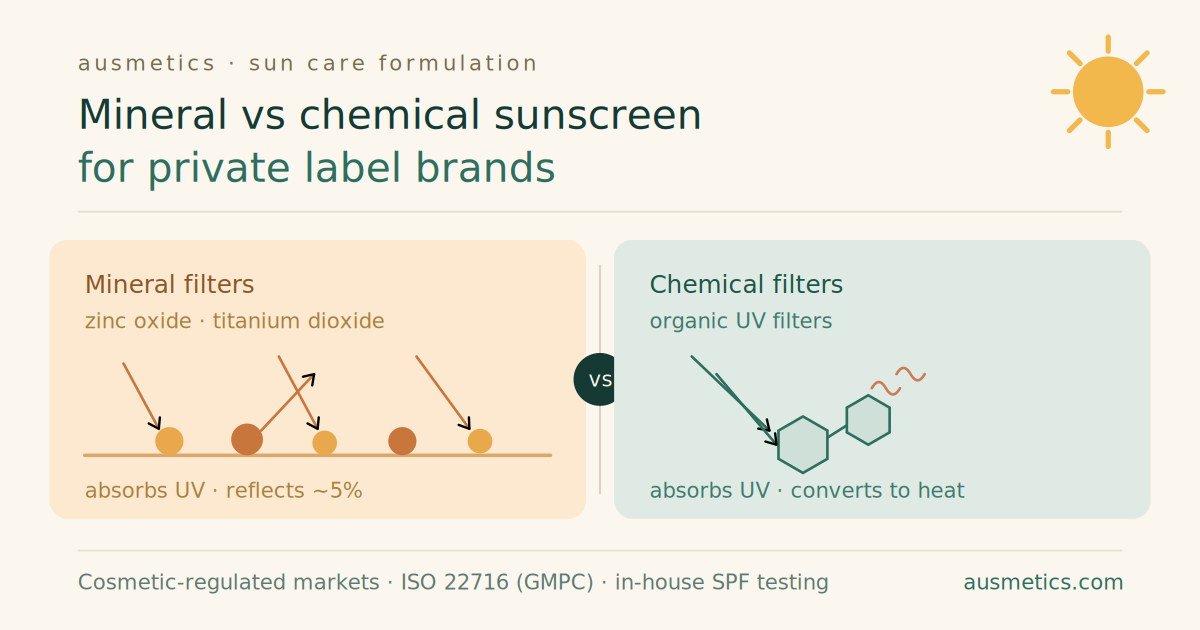
Маркетинг часто говорит: минеральные фильтры "отражать" УФ как зеркало, а химические фильтры "поглощать" это. Наука менее аккуратна. Рецензируемые измерения показывают, что оксид цинка и диоксид титана отражают лишь около 4–5% падающего УФ-излучения по всему спектру и защищают главным образом за счет его поглощения., так же, как это делают органические фильтры, и 2025 анализ минеральных продуктов на рынке пришел к такому же выводу. На практике оба семейства работают в основном за счет поглощения УФ-излучения.; значимые различия заключаются в ощущениях, стабильность, мягкость, заканчивать, и нормативный режим, не основной механизм.
В семействе минералов, два фильтра не взаимозаменяемы. Оксид цинка — единственный минеральный фильтр, который самостоятельно покрывает весь диапазон от UVB до длинного UVA., именно поэтому он закрепляет больше всего широкий спектр минеральные формулы. Диоксид титана силен против UVB и короткого UVA, но слаб против длинного UVA., поэтому разработчики рецептур обычно сочетают его с цинком, а не полагаются только на него.. Сочетание также позволяет формуле обеспечивать меньшую общую минеральную нагрузку., что уменьшает белый оттенок.
II. Компромиссы в рецептуре, которые формируют конечный продукт
На уровне производства, выбор между двумя семействами на самом деле является выбором между двумя очень разными формулировками задач..
А. Состав минеральных солнцезащитных кремов
Минеральные активные вещества представляют собой нерастворимые порошки., поэтому главная задача дисперсия: Частицы оксида цинка и диоксида титана должны быть распределены равномерно и не допускать слипания., поскольку агломерация создает разрывы в защитной пленке и неравномерный SPF.. Частицы с поверхностным покрытием, правильная система эмульгатора, и тщательная обработка всех материй. Минеральные формулы имеют тенденцию быть более густыми и могут казаться более тяжелыми., и они несут известные белый оттенок, наиболее заметен с ненаночастицами и на более глубоких тонах кожи. Наноразмерные частицы уменьшают этот эффект.; в ЕС, любой фильтр из наноматериала должен иметь маркировку "[нано]" рядом с его названием. Плюсы реальны: оба минерала очень фотостабильны., нежный, и хорошо подходит для чувствительной кожи, детка, и постпроцедурные продукты.
Б. Разработка химических солнцезащитных кремов
Органические фильтры имеют противоположный профиль.. Они растворяются в масляной или водной фазе., который делает легкие текстуры, спреи, и прозрачные гели гораздо легче достичь, и они более эффективно достигают высоких значений SPF. Загвоздка в том, фотостабильность: некоторые фильтры, особенно авобензон, разлагаются под воздействием солнечного света, если не стабилизированы, обычно путем сочетания их с октокриленом или с фотостабильным фильтром широкого спектра действия, таким как бемотризинол.. Хорошо продуманная химическая формула — это баланс между комбинациями фильтров., солюбилизаторы, и стабилизаторы. Некоторые старые органические фильтры также вызывают обеспокоенность потребителей по поводу чувствительности кожи., системная абсорбция, или коралловые рифы, что определяет то, как бренд их позиционирует.
С. Гибридная золотая середина
Многие современные солнцезащитные кремы не являются ни чисто минеральными, ни чисто химическими.. Гибридные формулы совместите минеральный фильтр с органическими, или с УФ-усилителями, чтобы сбалансировать мягкость и фотостабильность цинка с более светлым оттенком органики., часто допускает меньшую минеральную нагрузку и меньший белый оттенок. Для бренда, который хочет, чтобы минеральное позиционирование было без ощущения тяжести., гибрид часто является наиболее коммерческим ответом.
| Атрибут | Минерал (оксид цинка / диоксид титана) | Химическая (органические фильтры) |
|---|---|---|
| Первичный механизм | В основном поглощает УФ; отражает всего ~4–5% | Поглощает УФ, преобразует его в тепло |
| Широкий спектр действия сам по себе | Да, с оксидом цинка | Зависит от фильтра; часто нужны комбинации |
| Текстура и отделка | Толще; возможен белый оттенок | Легкий вес; обычно невидимый |
| Фотостабильность | Высокий | Варьируется; авобензон нуждается в стабилизации |
| Чувствительный / детская кожа | Обычно хорошо переносится | Скорее всего, будет жалить или раздражать |
| Легкость использования высокого SPF | Тяжелее без большой нагрузки | Легче и элегантнее |
| Лучшие форматы | Кремы, палочки, тонированные продукты | Жидкости, спреи, прозрачные гели, высокий SPF |
| Типичное позиционирование | Чистый, чувствительный, детка, заботящийся о рифах | Повседневная одежда, спорт, косметически элегантный |
Преимущество асметики: Даже минеральная дисперсия и надежная химическая фотостабильность — это именно то, что отличает комфортный, равномерно защищает солнцезащитный крем от мелового или неэффективного. С более чем 28 многолетний опыт разработки OEM/ODM и собственные лаборатории, Ausmetics разрабатывает минеральные, химический, и гибрид OEM солнцезащитный крем для брендов, продающих на регулируемых косметических рынках.
III. Ваш рынок решает, какие фильтры вы можете использовать
Какие фильтры вы можете использовать на законных основаниях, зависит от того, как ваш целевой рынок регулирует солнцезащитный крем., регулируемые косметические рынки обычно предлагают более широкий, более современная палитра. Положительный список Приложения VI ЕС разрешает более двух десятков УФ-фильтров — около 29 - по сравнению с примерно 16 в монографии о лекарствах США. Этот пробел включает в себя усовершенствованные фильтры широкого спектра действия, широко используемые на косметических рынках., такие как бемотризинол (Тиносорб С), бисоктризолы (Тиносорб М), и фильтры Mexoryl, некоторые из которых более фотостабильны, чем авобензон. В частности, для химических и гибридных формул., это означает, что бренды на косметических рынках могут создавать элегантные, фотостабильные продукты широкого спектра действия, которые не могут быть проданы на некоторых рынках, регулируемых лекарственными средствами..
Минеральные фильтры работают наоборот.. Оксид цинка и диоксид титана принимаются практически повсеместно., в том числе как два актива, к которым регуляторы на более строгих рынках относятся наиболее благосклонно. Таким образом, хорошо приготовленная минеральная формула является наиболее доступной на рынке., это помогает, если вы планируете регистрировать один продукт в нескольких регионах или выходить на рынки с более жесткими правилами в отношении органических фильтров..
Выбор фильтра может даже определить путь регулирования.. В Канаде, солнцезащитный крем, в котором используются только минеральные фильтры, может квалифицироваться как натуральный продукт для здоровья., в то время как препарат, использующий органические фильтры, рассматривается как препарат, отпускаемый без рецепта.. География часто является результатом решения о формулировке, это не просто ограничение.
В ЕС, продукт может претендовать на защиту широкого спектра только в том случае, если его защита от UVA составляет не менее одной трети от его SPF и его критическая длина волны достигает по крайней мере 370 нм. И поскольку Соединенные Штаты (безрецептурный препарат) и Австралия (терапевтический товар согласно TGA) требуется производство лекарств фармацевтического уровня, солнцезащитный крем для этих двух рынков полностью выходит за рамки контрактного производства косметики..
| Рынок | Как регулируется солнцезащитный крем |
|---|---|
| Евросоюз | Косметика — Регулирование (ЕС) 1223/2009 |
| объединенное Королевство | Косметика — Регламент Великобритании в отношении косметики |
| Юго -Восточная Азия (АСЕАН) | Косметика — Директива АСЕАН по косметике |
| Бразилия | Зарегистрирован "Оценка 2" косметический (АНВИСА) |
| Государства Персидского залива (GCC) | Косметика — GCC / стандарты ГСО |
| Соединенные Штаты | безрецептурный препарат (Монография FDA) |
| Канада | Лекарственный препарат, отпускаемый без рецепта, или натуральный продукт для здоровья |
| Австралия | Терапевтическое благо (TGA) |
| Япония | Квази-лекарство |
| Южная Корея | Функциональная косметика |
IV. Соответствие формулы вашему бренду и покупателю
С учетом науки и правил, практический вопрос заключается в том, какая формула подходит вашему покупателю., ваше позиционирование, и ваш формат.
А. Тип кожи и покупатель
Для чувствительных, реактивный, склонный к прыщам, детка, или кожа после процедуры, Минерал выигрывает в переносимости — оксид цинка мягок и успокаивает., and mineral formulas are less likely to sting the eyes or trigger irritation.For everyday wear, спорт, и покупатели, которые просто не примут никаких остатков, химические или гибридные формулы обеспечивают более легкий, более невидимый финиш. For brands building specifically for the youngest or most reactive users, our guide on formulating sunscreen for kids and sensitive skin goes deeper.
Б. Тон и финиш кожи
Белый оттенок – не второстепенная косметическая деталь; он непропорционально влияет на более глубокие тона кожи и является основной причиной, по которой потребители отказываются от минерального солнцезащитного крема.. Бренды, предлагающие широкий спектр оттенков кожи, часто выбирают химическую или гибридную основу., или тонированная минеральная формула, в которой используются оксиды железа для нейтрализации гипса и дополнительная защита от видимого света.. Соответствие отделки вашей фактической клиентской базе является не только коммерческим решением, но и рецептурным..
С. Позиционирование, претензии, и формат
Позиционирование обычно указывает в ту или иную сторону.. Чистый, чувствительная кожа, детка, и заботящиеся о рифах линии, нежирный минерал; производительность, высокий SPF, спорт, и удобные для макияжа ежедневные линии, нежирные химические или гибридные. Одно предостережение по поводу претензий: такие термины, как "риф-безопасность" это язык маркетинга, законодательно не определенные стандарты, поэтому тщательно формулируйте экологические требования и проверяйте правила вашего целевого рынка.. Формат тоже имеет значение — прилипает, бальзам, густые кремы, и тонированные изделия подходят для минеральных фильтров, пока распыляет, прозрачные гели, жидкости, а легкие продукты с высоким SPF гораздо проще создать с помощью органических фильтров..
| Если ваш приоритет… | Наклонитесь к… |
|---|---|
| Нежность для чувствительных, детка, или кожа после процедуры | Минерал |
| Невидимый финиш для всех оттенков кожи | Химический или гибридный (или тонированный минерал) |
| Чистый / позиционирование с учетом рифов | Минеральный или минералосодержащий гибрид |
| Высокий SPF и ощущение легкости | Химический или гибридный |
| Спрей, туман, или формат прозрачного геля | Химическая |
| Одна формула, регистрируемая на многих рынках | Минеральный или гибрид современного фильтра. |
Преимущество асметики: Потому что правильный ответ так часто "это зависит," важно работать с производителем, который разрабатывает формулы, используя все три подхода.. Ausmetics разрабатывает минеральные, химический, гибридный, и тонированные солнцезащитные кремы в нескольких форматах — кремы, жидкости, палочки, и спреи — для уход за кожей под частной торговой маркой и бренды солнцезащитных средств на регулируемых косметических рынках.
В. Тестирование, Претензии, и соответствие требованиям перед запуском
Какой бы маршрут вы ни выбрали, продукт должен быть протестирован и задокументирован, прежде чем он сможет соответствовать заявленным требованиям.
А. SPF и UVA тестируются отдельно.
Защита SPF и UVA — это две разные конечные точки., измеряется различными методами ISO — различие, которое стоит понять правильно. Фактор защиты от солнца определяется in vivo под ИСО 24444, референтный метод на основе MED; метод двух пластин in vitro, ИСО 23675:2024, также был опубликован. Защита от UVA оценивается отдельно.: in vivo через ИСО 24442, метод затемнения стойких пигментов, лежащий в основе японской классификации PA, или in vitro через ИСО 24443, который дает значения UVA-PF и критической длины волны, которые ЕС использует для маркировки.. Новый гибридный метод, ИСО 23698:2024 спектроскопия диффузного отражения, захватывает SPF, УВА-ПФ, и критическая длина волны в одном рабочем процессе. For a fuller walkthrough of these methods and what each one measures, see our explainer on как работает SPF-тестирование.
Б. Претензии, стабильность, и нормативное досье
Заявления о водонепроницаемости требуют собственных испытаний., и каждая формула требует данных о стабильности и сохранности, а также определенного периода после открытия.. Для косметических рынков, файл соответствия обычно включает оценку безопасности, проведенную квалифицированным специалистом, и файл с информацией о продукте.; в ЕС они сопровождают уведомление на портале CPNP., Рынки АСЕАН используют собственные системы уведомлений, и Бразилия требует регистрации ANVISA.. Полное обоснование требований SPF и широкого спектра действия., и избежание претензий на лекарства на косметических рынках, держит запуск на правильной стороне правил.
С. На что обратить внимание при выборе производителя
Специально для солнцезащитного крема, важными критериями являются косметические стандарты GMP и подлинные возможности проведения внутренних испытаний., это не общекорпоративный сертификат, в котором мало что говорится о самом уходе за солнцем.. Искать ИСО 22716 (ГМПК) производство и собственное SPF-тестирование, которые позволяют партнеру уточнить формулу и проверить производительность во время разработки, а не только в конце.. Наш гид по choosing a reliable private label sunscreen manufacturer turns these credentials into a full vetting checklist.
Преимущество асметики: Производство аусметики по стандарту ISO 22716 (ГМПК) with in-house SPF testing and an R&D team led by Dr. Джадир Нуньес, бывший глобальный президент IFSCC. Для брендов на регулируемых косметических рынках, эта комбинация поддерживает как соответствующую документацию, так и итерацию рецептуры, необходимую для сильного солнцезащитного крема.. Вы можете просмотреть наш гарантия качества стандарты для полной картины.
Часто задаваемые вопросы
Минеральный солнцезащитный крем лучше химического??
Ни то, ни другое по своей сути не лучше; правильный выбор зависит от вашего покупателя, ваше позиционирование, и ваш целевой рынок. Оба семейства защищают главным образом за счет поглощения УФ-излучения.. Минеральные формулы более щадящие., больше фотостабильный, и более мобильным на разных рынках, который подходит чувствительной коже, детка, и чистые линии. Химические и гибридные формулы легче., более незаметен на разных тонах кожи, и легче достичь высокого SPF, который подходит для повседневной носки и функциональных линий.
Почему минеральные солнцезащитные кремы оставляют белый налет, и можно ли его удалить?
Отливка изготовлена из оксида цинка и диоксида титана, рассеивающего видимый свет., и это наиболее заметно на ненаночастицах и на более глубоких тонах кожи.. Производитель может уменьшить его с помощью наномасштабов., хорошо диспергированные частицы, путем объединения двух минералов для снижения общей нагрузки, или с тонированной формулой, в которой используются оксиды железа. Его можно существенно свести к минимуму, хотя редко полностью удаляется из чистого минерального продукта.
Могу ли я сделать "риф-безопасность" солнцезащитный крем?
Вы можете создать солнцезащитный крем без органических фильтров, которые чаще всего упоминаются в дискуссиях о рифах., такие как оксибензон и октиноксат, и многие бренды используют для этого позиционирования минеральные формулы или формулы на их основе.. Имейте в виду, что "риф-безопасность" это маркетинговый термин, не имеющий единого юридического определения, поэтому претензии должны быть тщательно сформулированы и проверены на соответствие правилам и запретам на конкретные ингредиенты на вашем целевом рынке.. Наш гид по reef-safe sunscreen and modern UV filters covers which filters these claims target and what to use instead.
Какой тип облегчает производство продукта с высоким SPF??
Химические и гибридные формулы обычно более эффективно достигают высокого уровня SPF и дают ощущение легкости., потому что органические фильтры растворяются в формуле и хорошо сочетаются. Чистый минеральный продукт также может достигать высокого SPF., но обычно требуется более высокая загрузка оксида цинка и диоксида титана, что может означать более толстую текстуру и более белый оттенок. УФ-усилители могут помочь минеральной формуле работать выше уровня фильтра..
Минеральные солнцезащитные кремы действуют мгновенно, а химические требуют времени?
Химические солнцезащитные кремы обычно применяются примерно 15 к 20 минут до выхода на солнце, а минеральные фильтры эффективны сразу после установки пленки. В реальном использовании, хотя, нанесение достаточного количества продукта и регулярное его повторное применение имеют гораздо большее значение, чем тип фильтра для любого семейства.. The "работает мгновенно" преимущество минерала реально, но скромно, и не должны быть перепроданы потребителям.
Заключение и следующие шаги
В мире нет универсального победителя. минеральный или химический солнцезащитный крем решение. Минеральные формулы обеспечивают мягкость., фотостабильность, и широчайшая рыночная мобильность; химические и гибридные формулы обеспечивают более легкую текстуру, невидимый финиш на тонах кожи, и проще высокий SPF. Современные фильтры дают брендам на регулируемых косметических рынках больше возможностей, чем когда-либо, для создания элегантных продуктов широкого спектра.. Правильный выбор зависит от вашего покупателя, ваше позиционирование, ваш формат, и правила вашего целевого рынка, подтверждено надлежащим тестированием SPF и UVA.
Если вы весите минеральный солнцезащитный крем под частной торговой маркой против химической или гибридной формулы, Самый полезный следующий шаг — проинформировать производителя, который производит все три. Ausmetics разрабатывает солнцезащитные средства для регулируемых косметических рынков, при поддержке 28+ Годы опыта OEM/ODM, ИСО 22716 (ГМПК) производство, и внутреннее SPF-тестирование. Изучите наш разработка солнцезащитного крема под собственной торговой маркой возможности, или свяжитесь с нашей командой обсудить вашу формулу, Целевой рынок, и цели SPF.